Showing posts with label rhone blend. Show all posts

Thursday, September 29, 2011

Advanced Topics in White Wine

It's that time of year. If you have kids they're back in school with their pencils sharpened and their notebooks already full of doodles. You might be feeling a bit nostalgic about your own schooldays-gone-by, when you were taking courses and learning new subjects.

The best thing about loving wine (ok, one of the best things...) is that there is always more to learn. This fall, why not try some interesting whites that are beyond your normal Chardonnay-Sauvignon Blanc-Riesling comfort zone? You just may find a new favorite.

2009 M. Chapoutier Côtes du Rhône Blanc Belleruche (suggested retail $12.99; available in market for $8-$15) Red wine fans may be familiar with the rich, affordable red blends from the Southern Rhône, but have you ever tasted their whites? This blend contains Grenache Blanc, Clairette and Bourboulenc. It is more "old world" in style, with a fresh, neutral taste dominated by mineral and lemon peel notes. It tastes robust, and stands up well to richer fish (tuna, halibut), vegetable dishes, and chicken pot pie. If you like Sauvignon Blanc, I think you'll enjoy this wine. Very good QPR.

2010 Viña Robles White4 (suggested retail $16; available in market for $13-$16) ) This white blend is from Paso Robles, and gets its name from the four white grape varieties that go into every bottle: Viognier, Verdelho, Sauvignon Blanc, and Vermentino. This year's bottling is a very good QPR, versatile white wine with honeysuckle and citrus aromas and flavors. If you like dry Rieslings but are looking for a wine with more body, give this a try.

2010 Freie Weingärtner Wachau / Domäne Wachau Grüner Veltliner Federspiel Terrassen (suggested retail $15; available in market for $11-$17) The grapes are grown in Austria's Wachau region, and the wine that results is crisp with pear, stony mineral, and citrus elements. The wine tastes full and delicious, while retaining its bright and lively profile. Excellent QPR. I love Gruner Veltliner with fish, roasted chicken, anything made with lentils, and even Indian food.

2009 Leo Steen Chenin Blanc Saini Farms (purchased in my local grocery store for $19.99; available in market for around $17) Made from grapes grown in Sonoma County's Dry Creek Valley, this lovely Chenin Blanc is a lovely, dry example. There are apple and honeycomb aromas and flavors, which bring back the tastes of summer. If you like the apple notes in Chardonnay, but are not always fond of the oak that many winemakers use, try this wine and you won't be disappointed. And if you're looking for wines to set aside for Thanksgiving, this would be a great choice. Excellent QPR.

Full Disclosure: With the exception of the Chenin Blanc, I received samples of these wines for possible review.

Thursday, April 23, 2009

In Training for Hospice du Rhone

Next weekend I'm off to the 17th annual Hospice du Rhône tasting, an event held in Paso Robles to celebrate Rhône varieties and the winemakers who use them to create world-class wines. I am something of a Syrah maniac (a tendency I try to keep under control here on the blog) and love Viognier, too, so I'm really looking forward to tasting and learning about these wines.

To get in training for the event, I participated in the Hospice du RhôneTwitter Taste Live last Friday. (I can't seem to locate any feed of the tasting notes, but you can read east coast co-host 1 Wine Dude's report here.) From Europe through several time zones to the west coast, this provided an opportunity to taste a number of wines that were made with Rhône varieties from all over the world. I focused on wines from Australia and the US, and made a particular effort to get a sense of the differences between the wines made in US regions.

Here are my favorites from the tasting, and some initial observations.


Rhône Reds Can Be Larger Than Life. We tasted some big reds. The one I liked best was the 2005 Kinton Syrah from Santa Barbara County. With a whopping 15% alc/vol, I thought it was still a balanced wine with aromas of pepper, plum, cherry, and roasted herb. It tasted of plums, roasted coffee, and mint, with some spice cabinet flavors in the aftertaste. This was a lot of wine, but if you are looking for a big red, look no further. (available for $15-$23; good QPR)


I Love Mourvedre--Young or Old. I sampled two Mourvedres, one young and one from the 2003 vintage. I loved them both. The youngster--the 2006 Tablas Creek Mourvedre from Paso Robles--was a delicious wine with meaty and spicy aromas and flavors full of lashings of plum and a nifty espresso aftertaste. This wine is delicious now--but I wonder what it will be in another six years. My experience with the 2003 Cline Cellars Mourvedre Ancient Vines from Contra Costa County makes me think it will be even more spectacular. I purchased this wine three years ago in and when I popped the cork I was greeted by delicious aromas of spice, earth, cherries, and plums. There was terrific spiciness in the flavors, with a backdrop of plums, black cherries, and chocolate. (find the Tablas Creek Mourvedre for around $35, very good QPR; find more recent vintages of the Cline Mourvedre for $13-$22, excellent QPR)

Don't Forget to Look North for Rhône Varieties: Two of my favorite wines Friday night came from regions I don't normally associate with Rhône varieties: northern California's Sonoma Valley and Washington State. The 2007 Anaba Coriol White from the Sonoma Valley was one of the most exciting white wines I've had this year. Made from a blend of 69% Viognier, 15 % Roussanne, 10% Marsanne, and 6% Grenache Blanc, this extraordinary blend had aromas of sea salt and fennel pollen that reminded me of a stretch of Coastal 1 I know very well, where the sea is on one side and wild fennel grows on the other. There were flavors of apples, honey, melon, and spice. I'd highly recommend this wine. So, too, would I highly recommend the 2007 Substance Counoise from Washington State's Walla Walla Valley. This wine had oodles of character, with aromas of rose petals, roasted herbs, and earth. The flavors were a mouth-watering blend of cherry, leather, grilled meat, and pepper with a spicy aftertaste. (the Anaba Coriol White is available for $32 from the winery, excellent QPR; the Substance Counoise is available for $18 from the winery, excellent QPR)

I'll have a lot more to say about the Rhône in a little over week, so stay tuned.

Full Disclosure: I received the Anaba and Substance wines as samples.

Saturday, June 14, 2008

All We Are Saying Is Give White Rhones a Chance: WBW #46 Roundup

It was great fun to be the host for the 46th edition of Wine Blogging Wednesday, Lenndevours popular (and still growing) online tasting event. We had 43 bloggers from around the world participate this month, and they tasted a wide range of wines from all over the world, too. The overall reaction was overwhelmingly positive. Most tasted viogniers or blends of several Rhone white varieties, and Marsanne and Roussanne were well-represented as well. A few brave souls gravitated towards the more rarified varieties of picpoul, grenache blanc, and ugni blanc. Though there were a few unhappy tasters out there, the vast majority felt that their wines were tasty, good value, and perfect for summer drinking.

I've made two different visual images to give you an overview of who tasted wine and wrote about it for WBW #46, and what those tasters discovered about Rhone whites. The first is a simple map, with map-points for locations and a scrollable list of contributors at the bottom. You can click on any blog/blogger's name and find out which point belongs to them, or click on any map-point and it will give you the name of the blogger associated with it. Please use the scroll buttons in the upper left corner to navigate across the globe.


The second is a wine review format I developed and experimented with a while back called the TagCloud Review. This will give you an overall sense of what our field of tasters experienced when they drank their wine. The larger and bolder type is associated with the most frequent adjectives our 43 tasters associated with the look, smell, and taste of the wine. As you will see, the tasting notes were remarkably consistent, and many tasters emphasized the apple, mineral, and floral aspects of the wine they sampled. Our tasters also noted the prevalence of citrus notes (including lemon, lime and grapefruit). With 42 tasters and almost twice that number of wines, it would be a long and daunting business to give a mini-review of each tasting note, so I hope that the following "TagCloud Review" will help convince you to give Rhones a chance.


created at TagCrowd.com


What follows is a rundown of all the tasters and their entries. Please click on any of the highlighted blue links to read their full, informative posts.

First, kudos to those brave souls who tasted Rhone whites from two different regions. Sometimes the "old world" wines were more "new world" in style than many of the tasters expected, and vice versa. They include:

Bloviatrix, who tasted a 2006 Roger Perrin Chateauneuf-du-Pape Blanc from France and a 2006 Black Chook Viognier-Marsanne-Roussanne blend from Australia.

ExcelWines, who compared the 2006 Venta d'Aubert Viognier from Aragon and the Clay Station Viognier from the US.

Fork and Bottle, where Jack and Joanne tasted their way through a 2001 Eric Texier Condrieu Janrode from France and a 2004 Porter Creek Timberline Ranch Viognier from the United States.

Joe's Wine Blog, who tasted a 2006 Chateau des Charmes St. David's Bench Viognier from Canada, and a 2004 Chateau La Nerthe Chauteauneuf-du-Pape Blanc from France.

McDuff's Food and Wine Trail, where David tasted the 2006 Domaine Louis Cheze Ro-Ree Marsanne-Roussanne blend and the 2004 Edmunds St. John "Tablas Creek Vineyards" Roussanne from the United States.

My Wine Information, who tasted a 2005 Yering Station Marsanne-Viognier-Roussanne blend from Australia, and a 2003 Paul Jaboulet Aines Mule Blanche Crozes-Hermitage blend of Marsanne and Roussanne.

The Vinquire Blog
, who tasted their way through 6 Rhone whites including 3 from France (a 2006 La Vieille Ferme white blend, a 2007 Chateau l'Ermitage white blend, and a 2005 Sainte Croix Viognier) and 3 from the US (a 2006 McManis Viognier, a 2006 Gregory Graham Viognier, and a 2006 Cline Marsanne-Roussanne blend).

And the Wine Peeps, who had a 2005 Cougar Crest Viognier from the US and a 2005 E. Guigal Cotes du Rhone Blanc from France.

Special Mention also goes to our first time Wine Blogging Wednesday participants:

The Corkscrew Slummers, who had a Peltier Station Viognier.

2 Days Per Bottle, who drank a 2004 Garretson "Limoi Cior" Roussanne over two days and catalogued how the wine changed.

Pour Favor, who scored a 2006 Chateau Saint-Cosme white blend from the Cotes du Rhone.

Wine Blogging Wednesday #46 also had several "group participation" projects of various sorts:

First, we had the two tasters at Smells Like Grape who gave us their different takes on two French white Rhone blends: the 2006 Parallele 45 and he 2005 E. Guigal Cotes du Rhone blend.

Second, we had the father-daughter team of Erika and Adam Strum, who tasted the 2006 Truchard Roussanne from the Carneros appellation, and shared their reactions on Erika's Strumerika blog.

Third, we had live blogging from the London living room of Londonelicious, where seven French white Rhone wines were put to the test--you have to read the whole post to find which bottles were emptied first.

And fourth, we had the Young Winos of LA who creatively "recycled" some bottles acquired under cover of darkness following the Rhone Rangers tasting, including a rose, some reds, and two whites: the 2007 Minassian Young "White Rhinoceros" blend and the 2006 Ethan "Paradise Road" Viognier. It is good to know that they saved at least a few Rhone varieties from being added to a landfill.

We had two tasters with near misses: the Wine Negress, who tasted a 2006 J. L. Chave Mon Coeur, a red Rhone wine, alas; and Good Grape, who tried to drink an Argentinian Viognier, but gave up the attempt and drew a cartoon instead!

Our remaining tasters and their wines, organized by region, were:

Argentina:

EatingLeeds, 2007 Familia Zuccardi, S. Julia Viognier, Mendoza

Vinomadic, 2001 Conalbi-Grenberg Ugni Blanc, Mendoza

Australia:

WinoSapien, 2007 Tahblik Marsanne, Central Victoria

France:
1 Tim. 5:23, 2006 Cave St. Pierre Preference, Cotes du Rhone

1 Wine Dude, 2006 Domaine Louse Cheze Ro-Ree, St. Joseph

Anything Wine, 2006 Ferraton Samorens, Cotes du Rhone

At First Glass, 2006 Caves des Papes Blanc, Cotes du Rhone

Cheap Wine Ratings
, 2006 Le Jade Picpoul, Cotes de Languedoc
2006 Hugues Beaulieu Picpoul, Cotes de Languedoc

Cooking Chat, 2006 Verget du Sud Marsanne/Roussanne, Pays de Vacluse

Corkdork, 2006 Guilem Durand Domaine La Bastide Roussanne,

Drinks Are On Me, 2005 E. Guigal Blanc, Cotes du Rhone

Food and Wine Blog, 2003 Tardieu-Laurent Vieilles Vignes, Chateauneuf-du-Pape

The Wine Case, 1999 Chateau Grillet Viognier
Jean-Luc Colombo Les Gravieres, Croze-Hermitage
2005 La Redonne, Cotes du Rhone

Wine Lover's Journal, 2005 Domaine Philippe Plantevin, Cotes du Rhone

South Africa:

Spittoon, 2007 Origin Fair Trade Viognier, West Cape

United States:
1 Wine Per Week, 2006 Twisted Oak Viognier, Calaveras County

Behind the Vines, 2007 Rosenblum "Kathy's Cuvee" Viognier
2006 Rosenblum Fess Parker Vineyard Roussanne, Santa Barbara
2006 Rosenblum Preston Vineyards Marsanne, Dry Creek Valley

Domaine547, 2005 Qupe Bien Nacido Roussanne, Santa Maria Valley

Lenndevours
, 2007 Martha Clara Vineyards Viognier, North Fork LI

My Wine Education, 2006 Becker Viognier, Texas

Passionate Foodie, 2006 Curran Grenache Blanc, Santa Ynez

Through the Walla Walla Grape Vine, 2007 Sweet Valley Wines Viognier, Columbia Valley

Wannabe Wino
, 2006 Hannah Nicole Viognier, Contra Costa County

Wine Biz Radio, 2006 Red Car Boxcar White, California

Wine for Newbies
, 2005 Twisted Oak %@#$!, Calaveras County

If I somehow missed your post, please let me know so I can rectify the situation by leaving a comment below. Thanks to everyone who participated this month, since I know it is a busy time of year. When I know the theme and host for next month's event, I'll be sure to pass that news on to you.

Wednesday, June 11, 2008

Welcome to Wine Blogging Wednesday #46: Rhone Whites

Welcome to Wine Blogging Wednesday #46, the monthly online tasting event started nearly four years ago by Lenn Thompson of Lenndevours. This month, I'm your host and for the theme I wanted to pick something summery, that wouldn't be hard for people to find, and would bring some under-appreciated grape varieties into the spotlight.

The varieties that I think best exemplify summer are white varieties associated with the Rhone: Bourboulenc, Clairette Blanc, Grenache Blanc, Marsanne, Muscat Blanc a Petits Grains, Picardin, Picpoul, Roussanne, Ugni Blanc, and Viognier. These white grapes are grown all over the world, and produce wines that are rich in orchard and tropical fruit flavors, or have a bracing acidity that cools you down when its warm outsides. The wines made from these grapes are surprisingly versatile, and pair with a wide range of foods depending on how the fruit is treated during fermentation and aging. For this WBW you could drink any white Rhone variety or combination of varieties, from any region in the world, at any price point.

I decided to compare and contrast two wines: one made in the Rhone from a blend of Clairette and Grenache Blanc; and another made in Paso Robles, solely from Roussanne. The French white was aged in stainless steel; the Paso Robles white was kissed with some oak.

The first wine was the excellent QPR 2006 Ferraton Père & Fils Côtes du Rhône Samorëns ($12.99, domaine 547). The wine was made from organically and biodynamically produced Grenache Blanc and Clairette grapes grown in Tain l'Hermitage. Samuel Ferraton and Chapoutier have been in partnership on the property for the past decade, which has brought new resources and attention to the Ferraton operation. When I opened this bottle of wine, it smelled just like summer with aromas of pear, almond, and a bit of flower as the wine warmed up. The pale gold color was equally summery, and the flavors were redolent of summery orchard fruits like pear and peach. Because it was aged in stainless steel the wine retained a fresh intensity that would make it very appealing on a warm June or July day. An interesting nutty almond aftertaste added complexity to the wine. It had a nice round feeling in the mouth, and was a textbook example of a blend of these two varieties--for a terrific price.

The second wine I tasted was another excellent QPR pick: the 2004 Tablas Creek Roussanne ($22.95, Chronicle Wine Cellar; available online for between $19 and $28) I've tasted this wine twice in the last year or so. In the spring of 2007, it was all about the fruit. Now, a little more than one year later, it was a more complex and interesting drinking experience. This wine was true, deep gold in color and the richness of the color hinted at the richness to come. There were shy aromas of pear and minerals, and as the wine opened up there were delicious flavors of pear, melon, and mineral with a touch of beeswax in the finish. The overall impressions of the wine were soft and round, and there was no hint of alcohol or sense of heat despite its full body and heavy feel in the mouth. There was also just a hint of oak in the aftertaste, since 50% of the juice had been fermented in small French oak barrels. This was a big wine with a lot of complexity for the price.

Both of these wines were quite food friendly, and would lend themselves to a wide range of dishes from spicy curries and stirfries to rich scallop, lobster, and shrimp preparations. We had the Ferraton with a Peruvian Fried Rice--one of the world's earliest fusion dishes created by Chinese railroad workers in South America. Few wines could complement a dish that combined rice, ginger, soy sauce, shrimp, and chorizo, but the Ferraton did the job beautifully. The soft and round qualities of the wine were terrific with the shrimp, and the fresh pear and peachy flavors were a nice counterpoint to the ginger. As for the Roussanne, I always feel that this variety is made for scallops--and that's what we had it with. The rich, buttery texture and sweet flavors of the scallops partnered perfectly with the Roussanne's full-bodied melon and beeswax qualities. It doesn't matter how you fix the scallops, they will be perfect with Roussanne. Try a classic Coquilles St. Jacques, or Eric Ripert's innovative pan-fried scallops on a mound of orzo mixed with tomatoes, ginger, and lemon grass.

Summer is often associated with the crispness of Sauvignon Blanc, but Rhone whites are equally wonderful for drinking during the long, hazy, and lazy summer days and nights to come. Thanks to everyone who participated in this month's event, and be sure to drop me a note or leave a tasting note or a link in the comments if you'd like me to include you in the roundup this weekend. I'm really looking forward to reading what you all have to say about these wonderful whites.

Monday, May 19, 2008

Wine Blogging Wednesday #46: Rhone Whites

I'll be your host for Wine Blogging Wednesday #46, the June 2008 edition of the online tasting event started by Lenn Thompson of Lenndevours. June marks the beginning of summer, and we will all be looking for white wines to carry us through the warm evenings. Some of the best options for summer white wines are made with one or more of the classic Rhone grape varieties: Bourbolenc, Clairette Blanc, Grenache Blanc, Marsanne, Muscat Blanc a Petits Grains, Picardin, Picpoul, Roussanne, Ugni Blanc, and Viognier. Wines made with these grapes tend to be aromatic, and can often rival your summer garden in terms of lush floral and fruity fragrances. At the same time, however, the wines can be crisp and refreshing, especially if there is some Picpoul in the mix. And Rhone white grapes are perfect partners for fish, chicken, salads, and all of the vegetables that are beginning to flood into your local Farmer's Market.

Often Rhone grapes come in blended bottles of Marsanne and Roussanne, or some other combination, and blends are fine for WBW #46. Today, white Rhone grapes are planted throughout the world and I'm not fussy about where your wine comes from--I just want you to get out there and try some of these versatile, flavorful grapes. And, if you taste wines from more than one region (say one from Paso Robles and one from the Cotes du Rhone), you'll get top billing in the roundup. (image of Grenache Blanc from the Rhone Valley Wine website).

I hope that even if you have never participated in Wine Blogging Wednesday before you will join me in drinking a white wine made with one or more Rhone grape varieties in June. Then, on or before Wednesday, June 11 write about your tasting experience(s) and post them on your blog, on the Wine Blogging Wednesday community site, or in the comments here at Good Wine Under $20. Don't have a blog or are feeling shy? Email me your notes, and I'll include them in the roundup.

Just so that I don't leave anyone out, please drop me a line at goodwineunder20 (at) gmail.com with a link to your post after you make it, send me a message on Twitter with the link, or just plunk it in the comments here or on my June 11 post.

If you're not familiar with white wines made with grapes from the Rhone region, here are a few online resources to help you out:

The Rhone Rangers' list of white varieties, with descriptions of the flavors and aromas you can expect from each.

The Rhone Valley Wine website has descriptions of the French growing region and excellent maps.

Patrick Comiskey's excellent article from the August 2007 Bon Appetit magazine about why Rhone whites are the perfect wines for summer.

Enjoy exploring the expanding world of Rhone whites, and I look forward to reading all your tasting notes and food pairing ideas in June.

And if you're in the Los Angeles area, check your calendar to see if you can attend the Rhone Rangers tasting on June 4, 2008 from 6:30-8:30 pm. Forty-three wineries specializing in Rhone varieties will be there pouring wine at Raleigh Studios--so you may get to see a celeb or two. The cost is $60/person, and more details can be found here. You'll have a lot of tasting notes to share for WBW #46, that's for sure.

Thursday, March 20, 2008

Want the Jump on Future Wine Blogging Wednesdays?

Are you tired of running out to the store at the last minute for WBW selections? Do you sometimes wish you were drinking the same wine as someone else on WBW, so you could compare your notes to theirs? Have you always wanted to participate, but never been organized enough to do so?

Domaine547 comes to the rescue once again with their April-May-June WBW 3-pack of wines, which will get you sorted out in no time so that you can kick back and relax, secure in the knowledge that you have what you need to participate in the fun. At least until July.

For just under $45 (ok, $44.97) plus shipping you can get yourself set up with a French Cabernet Franc for April, a German Riesling for May, and a white blend from the Rhone. Pretty damn fantastic, especially if (like me) you never seem to have exactly what's called for when WBW is announced. (d547 budo-kan seeing vision of the WBW 3-pack)

Check out domaine547's site for details on vintage, makers, etc. Oh, and the shipping policies.

Cost of next three WBW bottles shipped to you from domaine547? under $45.
No last minute frantic searches in a wine store near you? priceless.

Monday, December 17, 2007

Cozy, Comfortable, and Classy: Chateauneuf-du-Pape

Of all the wines I love, there are none that I love so much as the Rhone blends from Chateauneuf-du-Pape. Some wines make me shout with excitement, others impress me with their finesse, and then there are those that intrigue me because of their rarity or their exceptional value. But only Chateauneuf-du-Pape makes me feel like I've put on a cozy, comfortable sweater and slipped into my favorite chair. The heavy embossed bottles, with the keys of St. Peter crossed just over the label, are classy enough for any fine dinner party, yet they never seem to intimidate anyone, either, perhaps because they are not so highly touted as Bordeaux and Burgundy. Despite their relatively low profile, wine critics love them, and bottles of Chateauneuf-du-Pape often appear at the top of "the best wines of" lists, as they do this year.

What's even better is that truly excellent wines from Chateauneuf-du-Pape can be surprisingly affordable.

The 2003 Perrin & Fils Chateauneuf-du-Pape Les Sinards is a case in point. I bought this last January at Costco for $23.69. You can still find it online for between $25 and $38, which is not too bad for a wine this good with some age on it. My first tip, though, is to by them a bit younger and age them yourself, even for a short period. This wine was only 2 years into its suggested "drinking window" when I bought it and eleven months older when I drank it. But it should continue to develop and evolve for the next five or six years, if you have space in your cellar for it. That's one of the nicest things about Chateauneuf-du-Pape wines: they tend to be ready for drinking much sooner than their red neighbors to the north in Bordeaux, and yet they have aging potential, too. The January 2008 edition of Food & Wine Magazine, for instance, includes 2005 Chateauneuf-du-Papes as one of the best wines to buy this year and cellar for the future, since the 2005 vintage is seen as one of the most age-worthy in recent years.

When I popped the cork on the 2003 Perrin & Fils Les Sinards all the comfort and excitement I associate with one of these great Rhone red blends was evident from the very first aromas that came from the bottle. Scents of plum, leather, thyme, and tobacco were accented with just a hint of ripe apricot. As if this wasn't complexity enough for one wine, the flavors included plum, allspice, and blackberry. The wine had a lingering finish that was warm and spicy. This was a lot of wine for $24, and something that would fit well on any holiday table whether you're serving beef, turkey, goose, or even a vegetarian option like mushroom and chestnut stuffing. Excellent QPR, and I will be seeking out other vintages of this wine.

The Perrin family has roots in the Rhone that extend deep into the 16th century. They are known for making superb wines, including their flagship Chateau Beaucastel red wine. The Perrins are long-time partners of Robert Haas's vineyard and winery in Paso Robles, Tablas Creek, which has done so much to raise the quality, and consciousness, of Rhone varieties here in the US. So when you drink this wine, you are also tasting more than a little bit of history with each and every sip. But the Perrins aren't content to rely just on their history--they embrace the future as well as the past and explore sustainable farming practices as a way to link together traditionally-proven growing techniques with their concern for the environment. They even blog, and you can learn a lot about the Chateauneuf-du-Pape appellation, and their viticultural efforts, by reading it.

If you see a bottle of 2003, 2004, or 2005 Chateauneuf-du-Pape when you're in the wine store and it's a good price, you might want to give it a try since all three were recommended vintages. And if you see a bottle of Perrin & Fils, snatch it up right away. I may be behind you in the aisle, and if you show the slightest indecision I'll have it in my cart before you get a chance to think again.

Monday, August 27, 2007

A Rhone Reminder

One of the great things about being a wine blogger is you are always on the look out for new wines to write about, and new regions to explore. This year I've tried to focus on getting to known Spanish and Burgundian wines in order to expand my palate and wine knowledge. I've loved every minute of it. But, as Tyler Colman pointed out in his list of the pros and cons of wine blogging in Wine and Spirits magazine, the upside of exploration has a downside: you drink less of your favorite wines.

I just got a big reminder that I love Rhone wines. Whites, reds--doesn't matter. Bring them on. I love syrah, grenache, mourvedre, grenache blanc, roussanne, and marsanne. And I could go on and on about the Rhone blends that are so drinkable, and yet so complex at the same time. The Rhone has its expensive wines, to be sure, but it also has bargains and those bargains often come under a Cotes du Rhone label. These wines are grown in vineyards that fall outside of the more famous named appellations like Crozes Hermitage, Cote Rotie, and Chateauneuf du Pape. As a result, they are often less pricey than their better-known neighbors.

They often represent excellent QPR, too, like this 2005 Domaine les Grands Bois Cotes du Rhone Les Tres Soeurs ($9.95, Chronicle Wine Cellar; available from other merchants for between $10 and $15). Let me say off the bat that this was a lot of wine for under $10. A rich ruby color made the wine look as luscious as it tasted and I was eager to get my nose into the glass as soon as I had poured it. The wine was blended from 60% old vine grenache, 30% syrah, and 10% carignane, producing a wine that had abundant aromas of berries, herbs, and spice. These are the classic hallmarks that I associate with the grenache varietal. Berries and herbs continued through the flavors, with that distinctive brushy-dusty-herbal flavor that is known as garrigue and always reminds me of country lanes in the height of summer. Underneath it all was a Rhone funkiness of earth and leaves, and it ended with a mouthful of spice.

This was a really good, classic, and drinkable Rhone wine. It was the kind of wine that would go as perfectly with roast chicken as it would with chili or stew. And it was a reminder to me that sometimes you just need an old favorite to bring your day to a satisfying close.

Saturday, December 16, 2006

Saturday Wine Shopping--Feeling Sorry for Myself

Never, never go wine shopping when you are feeling sorry for yourself.

If you are a regular reader, you know that I am suffering from pre-holiday crazies, with too much work to do. And I'm not just back from Burgundy, like Brooklynguy. I'm not hiking through the wine country with Winehiker. And I'm not decorating my tree, baking cookies, or wrapping gifts because I have too much work to do. Sniff. (This is all rather pathetic really, since I have an awful lot to be thankful for this year and should be counting my blessings.)

So I cut myself a deal: if I got some work done, I could go to Chronicle Wine Cellar and buy some wine.

And so I did.

Chronicle Wines has lots of Italian reds, Cabernets from California, and French reds from the Rhone and Burgundy right now at wallet-friendly prices. Lots of good browsing and buying for holiday meals, and the store was full of happy customers (self included). If you need a break from all the hullabaloo, head on over there and check out their selection.

Inspired by reading all those Burgundian posts coming out of Brooklyn, I was in a definite French mood. I picked up a 2005 Domaine Raymond Dupont-Fahn Auxey-Duresses ($24.95, the label for the 03 pictured here). I didn't have my vintage card with me or I probably would have also bought a bottle of 1999 Pernand Vergelesses (sorry Neil, I can't remember the maker...). Also in the box when I left were a 1998 Chateau la Grave Ste. Croix du Mont ($12.95), a wine that I've never had but it is a dessert wine from an appellation across from Sauternes; and a 2005 Domaine les Grands Bois Cotes du Rhone Cuvee Les Trois Soeurs ($9.95). I continued my romp through the European labels with a 2003 Pago Florentino Tinto from La Mancha ($14.95) and a 375ml bottle of the 2003 Bodegas Arzuaga Navarro Ribera del Duero Crianza ($12.95/375ml and $23.95/750ml). Topping it off? A 2005 Scherer Pinot Noir from Alsace ($12.95).

As I sit among the bottles, with papers strewn all over my desk, the accusing blinking cursor on the computer is telling me its time to pull myself up by my bootstraps. Back to work, with the pleasant anticipation of some interesting wine to get me through the holidays and into the new year.

PS. It worked. Now I don't feel sorry for myself anymore. I feel vaguely guilty, though...

Sunday, December 03, 2006

Andrew Murray Tasting Room, Los Olivos


After we finished over at Bridlewood, we took the short trip along Rt. 154 to the charming town of Los Olivos, where there is a string of tasting rooms extending down Grand Street. (you can click on this map to enlarge the view, and you will see all the tasting rooms listed). Boutiques, galleries, restaurants, and other shops fill the streets of this small town.

We wanted to taste some Andrew Murray wines, and since their vineyards on Zaca Station Rd. are closed to the public, our goal in Los Olivos was to stop into the tasting room pictured here. On the way we picked up sandwiches at the branch of Panino just off Grand in the heart of town.

Andrew Murray is a UC Davis graduate who has received all kinds of press for his distinctive wines. He plants only Rhone varietals in his own vineyards, though he does also serve as wine maker for his neighbors at Oak Savanna. Murray is devoted to syrah in particular, and crafts his wines with the philosophy that good wines are made in the vineyard, and the winemaker "merely takes care of them" in the cellar. This is a winemaker who specializes in small production wines, and although you can sometimes find his Tous les Jours Syrah in shops, most of these wines are sold directly through the winery or in the tasting room. The Andrew Murray wines website is full of information, so I encourage you to take a look.

In the tasting room, you received 10 pours (9 Andrew Murray wines, and 1 Oak Savanna wine) for $10, and got to keep the Andrew Murray glass. Contrary to the tasting room website, it is not a Riedel "O" series glass, but at least it doesn't have a rounded edge! The wines poured for us included:

2005 Viognier, Santa Ynez Valley ($25): Aromatic with flowers, pineapple, and citrus, which come through as you sip the wine, too. Crisp, clean-tasting, and complex. 550 cases made. Good QPR.

2004 Enchante ($22):
A blend of two white Rhone varietals (Roussanne and Marsanne). Rich tasting with melon and oak aromas and flavors. More full-bodied than the Viognier, and a nice change from chardonnay for lovers of that varietal. 800 cases produced. Good QPR.

2004 Oak Savanna Vineyards Chardonnay Rancho La Zaca ($30):
An exceptional chardonnay, with pronounced pear aromas and flavors with a bit of citrus and a real streak of minerals. Bright acidity is kept in check with a little bit of oak. Round, complex, delicious. 350 cases produced. Very good QPR.

2004 Esperance ($22):
Murray's red blend intended to translate Chateauneuf du Pape to the soils of Santa Ynez. Grenache, Syrah, and Mourvedre are blended into a wine with black cherry, blueberry, cinnamon, and black pepper aromas and flavors. Delicious, and will be more delicious in a few years. 850 cases produced. Good QPR.

2004 Grenache Central Coast ($28):
Murray only bottles his Grenache by itself if the vintage is of sufficient quality, and the 2004 lived up to his standards. Raspberry, cranberry, and currant aromas and flavors. Unusually soft and drinkable for a 100% grenache wine, only 300 cases were produced. Good QPR.

2004 Syrah Estate Santa Ynez Valley ($25):
Made only with Syrah grown on the hillsides of the Santa Ynez appellation, this wine is full of cherry flavors and aromas with an interesting note of black tar. Oak is used, which makes it nice and smooth, but the bright acidity keeps it interesting. Perfectly drinkable now, or cellar it if you can wait. 1100 cases produced. Good QPR.

2004 Syrah Roasted Slope Vineyard ($34):
This is a big, interesting wine made from Syrah and Viognier grapes that are interplanted in the same hillside vineyard (just like in the Cote Rotie in France). The grapes are picked and fermented together. Black cherry, plums, and a hint of strawberry in the aromas and the palate. Would benefit from 2-10 years in the cellar to help round out all its edges, but I have no doubt in time it will be spectacular. 800 cases produced. Good QPR.

2004 Syrah Westerly Vineyard ($36):
Made from grapes from the eastern part of the Santa Ynez AVA. This produces Syrah with higher alcohol and lower acidity due to ripeness and less marine influence. This monster wine had 15.4% alc./vol. and didn't even taste alcoholic. Flavors and aromas were typical of the varietal, with blackberry and spice notes. 284 cases produced. Good QPR.

2005 Viognier Late Harvest ($20/375 ml):
A yummy dessert wine, with peach jam and honeysuckle aromas and flavors. On the back end you got a bit of apricot. Not as sweet as most late harvest viogniers, it would be excellent chilled and served on its own as a dessert, or with fruit-based desserts. Very good QPR.

I was really impressed with all the wines I tasted, and for Rhone lovers Murray is a name to watch. Murray does have a wine club, and given how few cases are made of these wines it is appealing to think of receiving them on a regular, reliable basis. The prices are a bit steep for me, but I did leave with a bottle of the Chardonnay, the Esperance, and the Late Harvest Viognier because they were so darn good.

Saturday, December 02, 2006

Bridlewood Winery

Bridlewood Winery was our first stop in Santa Barbara. Located in the Santa Ynez Valley AVA, Bridlewood specializes in Rhone varietals such as viognier, rousanne, marsanne, and syrah. Located on a beautiful spot, the winery used to be a horse farm, and still has horses roaming around in the back.

When we arrived we headed into the tasting room, which had lots and lots of Bridlewood gear--t-shirts, tote bags, baseball hats, it went on and on--and some snack foods in case you wanted to buy a bottle and go out to the terrace for a picnic.

We decided to go straight for the tasting, which was $7 for four pours (and the rolled-edge, Bridlewood etched glass was yours to keep). This tasting had the fewest pours, and the middle price of the three. Could it be all the merchandising that drives up the prices?? And do people really want all these glasses? I'd rather have a cheaper tasting and no glass!

We began the tasting with the 2005 Bridlewood Winery Viognier Reserve Central Coast ($24). 10,000 cases of this wine were made, and I felt it was the best wine of the tasting. I did find bottles at significantly lower prices on Wine-Tracker. This was a slightly sweet, aromatic viognier with citrus and flower aromas and a peachy palate. It would be excellent with curries and rich fish dishes. Good QPR.

The next wine poured was the 2004 Bridlewood Winery Arabesque ($24), Bridlewood's red Rhone-style blend made of Grenache, Mourvedre, Cinsault, Syrah, and Viognier. Light cherry in color, with spicy box aromas, there were cherry flavors and a bitter tobacco flavor on the palate. This wine just didn't hang together for me, and I wasn't at all sure that ageing the wine would help. Poor QPR, given the low prices of most Rhone blends from the Rhone. 970 cases produced.

Next up: the 2005 Bridlewood Winery Syrah Reserve ($22) Predominantly (93%) syrah grapes, blended with a bit of grenache, Roussanne, and Cinsault. This was a big wine, with blackberry, plum, and spicy cedar aromas. In your mouth, you got a smooth, extracted taste of blackberry jam. Unlike the Arabesque, I felt this would continue to improve during a few years of cellaring. Good QPR.

Finally, we had the 2003 Bridlewood Winery Syrah Blue Roan ($30). Faint blueberry and flowery aromas were accompanied by a definite whif of sweet, round oak. There were flavors of cassis and blueberry, with some soft tannins. Very round. Drinkable now, this wine should also improve steadily in the cellar for another 2-3 years. 554 cases produced. Good QPR.

I didn't feel any of these wines were special enough to warrant the prices, but my dad found a bargain: bottles of the 2001 Reserve Syrah for just $9. I wished they had poured some of their gewurztraminer, or one of their late harvest viogniers or syrah ports to round out the tasting a bit. Still, we were glad that we went and tasted these small-production wines that we would not in all likelihood see in the stores.

Tuesday, November 14, 2006

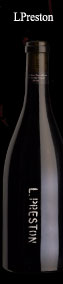
2004 Preston of Dry Creek "L. Preston"


After several days of blistering Indian Summer, it's starting to feel like fall again. I wanted something that fit this transition--robust in spices but grilled, heavy on the vegetables flooding into our local farmer's market, but substantial and rich. I found just what I was looking for in a clipping from the September 2006 Sunset magazine: flank steak with warm Moroccan spices, accompanied by a grilled eggplant and pepper salad. When I read the recipes, I realized that they were actually part of a feature on pairing wine with food. The wine the editors suggested was a syrah, but looking into my wine rack I saw something I thought would work even better: a syrah-based California red blended as a homage to Rhone varietals.

The 2004 Preston of Dry Creek "L. Preston" (Chronicle Wine Cellar, $17.95) is a plush, velvety, Rhone-style blend of syrah, mourvedre, carignane, and cinsault. While US wines tend to use a single varietal, blending reds and whites is a long-standing tradition in Europe. Some of the world's best-known wines are in fact blends, including most red wines from Bordeaux and the Rhone. No matter where blends are made, they often represent excellent value, since blending grapes enables the wine-maker to make the most appealing and rich wine possible with a palate of varietal flavors and aromas.

If you aren't familiar with Preston of Dry Creek, they have a great website that describes the farm and vineyard, and the family's wine making philosophy. Preston of Dry Creek are organic wine makers, and they use what they describe as "minimalist" methods. Keep your eye out for their wines.

I had a glass of wine while I was finishing with dinner, and it was just delicious. Deep raspberry in color with scents of spicy red fruits and dark chocolate made you want to dive in and paddle around. More dark chocolate, red raspberries, blueberries, spice, and black pepper swirled around in the flavors, providing a long, luscious finish that sent you straight back to the glass for another sip, and then another. This wine had fully integrated tannins, but was still robust enough to stand up to the spices I was using. Once we sat down to eat, the wine was just as good with the food as it had been on its own.

This was a classy California Rhone-style blend, that represented very good QPR. Why is such an excellent wine only very good in the QPR department? Simply because most domestic and imported Rhone blends are typically available at a lower price point than this one. Still, I will be buying more!