Showing posts with label sangiovese. Show all posts

Monday, October 03, 2011

The Future Looks Rosé

Now that we're into autumn, you may think the future looks decidedly less Rosé.

Those of us who drink Rosé wines--those pale to dark pink bottles of wine made from everything from Cabernet Sauvignon to Zinfandel--tend to think of them as summery offerings, suitable for picnics and barbeques but not for serious food.

Actually, Rosé wines are versatile and food friendly. They pair with almost everything. Served with a bit of a chill, they offer refreshment when your table contains spicy dishes. And they are usually very affordable.

Here are two of my favorite Rosés, which I tasted over the summer and early fall and which I have no problem recommending to those of you who are ready to take out your stew pot and turn on your oven. And both of them are dry wines--which means that they will pair with almost everything.

2010 San Giovanni Garda Classico Il Chiaretto ($15.00, domaineLA; available in market for $13-$15) This delicious Rosé is made from an Italian blend of Barbera, Groppello, Marzemino, and Sangiovese. You will smell the strawberries, and the aromas carry over into the flavors. There is a pleasant stony edge to the strawberry tones, and a lovely, savory note in the aftertaste. Well-balanced, medium-bodied, and excellent QPR. We had it with a Jamie Oliver dish of grilled tuna with oregano and lemon, grilled zucchini, and some garlicky cannellini beans, and the wine had the right amount of fruit, acidity, and minerality to pair with the dish. It would also be great with creamy pasta dishes, sausage, or roast pork. Note: It comes in a cute, chubby bottle but it does contain the full 750ml that you're used to.

2010 Château d'Esclans Côtes de Provence Whispering Angel ($20.99 from my local independent grocery store; available in market for $13-$27)
This wine is very, very pale pink in color--think ballet-tights pink. The aromas are even drier than those of the Il Chiaretto, with under-ripe strawberries, chalk, and melon rising up from the glass. The flavors echo the aromas, but the chalk becomes more intense. Very dry, very savory, and very good QPR (though if you can get it for under $15, you will find it's excellent QPR) This wine is made mainly from Grenache, with some Rolle, Cinsault, and Syrah blended in to it. A nice pairing for shrimp or other shellfish, salmon, tuna, or roast chicken.

Monday, November 29, 2010

The $10 Red Wine Miracle for the Holidays

Most of us are planning meals in the next four weeks that call for red wine. No matter what your family tradition--latkes, brisket, bowls of spaghetti and meatballs, roast beef, or even turkey--I have THE red wine for you. It's versatile, it's rich-tasting, and it's around $10 in most markets.

The wine in question is the excellent QPR 2008 Marchesi de' Frescobaldi Rèmole Toscana, a Super Tuscan blend of 85% Sangiovese and 15% Cabernet Sauvignon. Sangiovese grapes are known for making bright, cheerful, versatile wines that are acidic enough to stand up to tomatoes and spicy enough to weather stews and roasted meats.

When you add a splash of Cabernet Sauvignon to the Sangiovese, however, you get a wine that is deeper, richer, and darker. These blends have been given the name "Super Tuscans" and they usually come with a super pricetag, too. Not so this wine. This humble price (between $8 and $13 throughout the US) gets you a wine that is rich and lively, with plummy and cherry notes in the aromas and flavors. The wine retains a nice acidity, however, with a peppery aftertaste. As it opens up, leathery and herbal notes emerge.

Most of us need all the help we can get in December. Like having a little black dress in the closet, with this wine in the house you will be ready for most occasions.

Full Disclosure: I received a sample of this wine for review.

Thursday, August 13, 2009

This Summer's Most Refreshing Rosé

When rosés are good they're very, very good--but when they're bad they're horrible. Thankfully, I've had many good rosés this summer. And the one that I keep buying more of is the excellent QPR 2008 A to Z Wineworks Rosé ($12.49 from my local grocery store; $10 direct from the winery). This was one of those serendipitous discoveries. I wasn't looking for a rosé or any wine at all, to be honest. But there it was, sitting on the shelf in the supermarket.

What caught my eye at first was its deep rose color. Not magenta, not deep salmon--true rose. Oddly enough, this color is rare among rosés. So I took a bottle home and I've been hooked ever since.

The 2008 A to Z Wineworks Rosé is a lovely, full-bodied but dry rosé made from Sangiovese grapes. It has an intriguing mixture of fruit, herb, and vegetable flavors and aromas. Imagine a wine that combined raspberry, strawberry, parsley, and cucumber notes. Now imagine how refreshing and crisp that combination would be. That's exactly what this wine represented to me, and with the temperatures still high and the sun out it's a combination that seems to fit the way we're living now.

I wasn't familiar with A to Z Wineworks so I got on the 'net and did some surfing. They have a great website, and their motto is "Aristocratic wines at democratic prices." Standing behind the name is a dynamite team of Oregon's best winemakers, including Bill Hatcher (formerly of Domaine Drouhin), Sam Tannahill (formerly of Archery Summit), and Cheryl Francis (formerly of Chehalem). They make a full lineup of wines, including Pinot Noir, and not one of them retails for more than $20. So check them out and get a mixed case of Riesling, Pinot Blanc, and other goodies to get you through the fall. And don't forget this great rosé. It's terrific now, and will be just as good with turkey sandwiches in November.

Wednesday, June 17, 2009

Which Wine? Twitter Sommeliers on BBQ Chicken and Coleslaw

Last week I was getting ready to put some chicken on the grill. I'd already made some coleslaw, and had the tomato-based spicy sauce ready to lather onto the birds. (photo by vbalchen)

Which wine?

I was feeling uninspired. There was only one thing I knew for sure--I didn't want Zinfandel. Not that I have anything against Zinfandel. I just wanted something different.

So I got on Twitter and asked folks to suggest a grape that might go with this dish. My Twitter sommeliers' suggestions included the following: Rosé, Viognier, Syrah, Malbec, and Sangiovese.

You can imagine the rest. I opened up a bottle of each and tried them out with the meal. Dinner proved to be a challenge because the BBQ sauce on the chicken was spicy and slightly sweet. The coleslaw, on the other hand, was earthy and tangy. Here are my tasting notes for the wines I drank, and they include verdicts on the food pairing--and suggested alternatives.

2007 The Crusher Wilson Vineyard Viognier (suggested retail $12.99; available from $11-$16.50) From a partnership between Don Sebastiani & Sons and Clarksburg's Wilson family, huge honeysuckle aromas greeted me on first opening this wine, followed by hay, citrus, and honey flavors. The wine was creamy in the midpalate, with a bright, zingy finish. Very good QPR at $13, but it wasn't a great match with the chicken or coleslaw. It would, however, be sensational with lemon-garlic grilled chicken, or some grilled fish or shrimp.

2007 Dievole Dievolino Toscana IGT (suggested retail $9.99; available for $9-$10) This Sangiovese was bright ruby in color with sour cherry and earthy aromas that are a bit shy at first. The sour cherry and raspberry palate has chalky tannins and an earthy aftertaste. Very good QPR for those looking for a traditional Sangiovese, but it wasn't a great match with the chicken or the coleslaw since these foods tended to accentuate the earthiness and pull the wine out of balance. Instead, think of pairing it with grilled mushrooms or some smoky sausages for a great outdoor dinner.

2005 Barton & Guestier Rosé d'Anjou (suggested retail $9.99, and available for that price)
This wine was made from Cabernet Franc grapes and was a lovely salmon pink in color. Honeycomb and raspberry aromas made for an enticing start, and this was followed by a strawberry and raspberry palate. The wine was a hair off dry--so it would be very nice with spicier foods than the chicken I was serving tonight. This wine was the best partner for the coleslaw, too. The fresh berry flavors were a nice counterpoint to the salad's earthiness. Very good QPR.

2007 Substance Malbec (suggested retail, $18; contact the winery for more information) This Malbec from Washignton State's Columbia Valley was excellent. A deep, dark Malbec with blueberry and blackberry aromas, it had a satiny texture and rich, fruit-forward taste with great underlying mineral notes. Nicely peppery aftertaste, too. This wine was the best partner for the chicken, and brought out the sweetly spicy BBQ sauce to perfection. Excellent QPR.

2006 Black Sheep Finds Syrah Hocus Pocus ($17.99, domaine547; available for $16-$21) I look forward to the new vintage of this wine every year, and actually managed to hold onto this bottle for a bit to see how it would develop. Though purchased at the end of 2007, it's drinking just beautifully now and has lovely fresh aromas of plum blossom, plum, and berry. Layers of allspice, cinnamon, and a hint of cloves add to the fruit and there is a nicely peppery finish. Lovely example of the grape, excellent QPR for a quality Syrah, and the appellation, and another great vintage from Black Sheep Finds. This wine was the best partner for BOTH the chicken and the coleslaw as it had just the right blend of sweetness and spiciness to marry with the dishes.

Thanks to all my friends on Twitter for serving as virtual sommeliers for the evening. It was so much fun I'm bound to do it again.

Full Disclosure: except for the Hocus Pocus Syrah, the other wines tasted were samples.

Monday, June 01, 2009

Retasting a Tried-and-True Favorite from Chianti

The first Chianti I ever bought was a bottle of Marchesi de'Frescobaldi Nipozzano Riserva. I knew nothing about Chianti--not what grape it was made from, or what the words "Chianti Rufina" meant on the label. Since then I've learned the answer to the first question (Sangiovese) and the second (Chianti Rufina is a particular sub-region of Chianti that is north and east of the main wine-producing area. You can find out more about Chianti Rufina from these articles I found on AbleGrape).

And I've also had a lot more Chianti. I like Sangiovese, with its lighter body and earthy flavors. But Chianti prices skyrocketed a while back and I drink less of the wine than I'd like. But wines from Chianti Rufina represent some of the best QPR in this prestigious wine region--as I was pleased to rediscover with the latest release of my tried-and-true favorite.

The 2005 Marchesi de' Frescobaldi Chianti Rufina Nipozzano Riserva (available for $17-$28) is an excellent QPR Italian Sangiovese. It had wonderful cherry aromas and flavors that were both fresh and rich. The wine picked up some additional complexity in leather, oak, and spice notes. There was a luscious, juicy aftertaste and the wine had excellent acidity which made it a terrific partner for food.

If you're looking for a meal to pair with your Chianti Rufina, try this pasta dish with arugula-almond pesto and meatballs. The arugula and almond pesto will save you some money (at least until the summer basil comes in), and has a wonderful flavor. The meatballs are made with a dash of red wine and two kinds of ground meat. I made the recipe twice--once with the lavender the recipe calls for and once without--and preferred the version without the lavender. Either way the herbal pesto and the cherry fruit in the wine work well together, and the meatballs pick out the leathery, spicy aspects of the wine.

Full Disclosure: I received this wine as a sample.

Tuesday, April 14, 2009

$10 Pizza Wine Find

Yesterday I reviewed an excellent, traditional Sangiovese. If you want to try another bottle, this one priced to cost less than your next takeout pizza, I have one for you.

It's the 2007 Marchesi de' Frescobaldi Rèmole Toscana IGT, a Sangiovese with some Cabernet Sauvignon blended into it. (suggested retail $10; this is a new vintage, but previous vintages can be found for $8-$14). It has sour cherry aromas touched with green, peppery notes. These aromas can be found in the flavors, too, and there is a fruity, juicy finish touched with cedar and smoke. I can't think of a wine that would go better with a sausage pizza, or one with mushrooms and green peppers.

And for $10, it's a no-brainer. And though very different in style from yesterday's Sangiovese, this one also represents excellent QPR for its affordability and taste.

If you're looking for more wine finds that are $10 and under, it's always worth checking out the recommendations made by my friends Taster A and Taster B over at Smells Like Grape. Every Tuesday they highlight their latest $10 wine, so head over there now to see what they're sipping.

Full Disclosure: I received this wine as a sample.

Monday, December 29, 2008

Sangiovese: Something for Everybody

Sangiovese is one of those grapes that may actually suffer because it's so versatile and mutable. Soil, climate, winemaking technique--each shapes the wine in the bottle. This is true of all grapes, of course, but it's somehow more evident in a cheerful, acidic grape like Sangiovese. (image © Cephas Picture Library)

To finish up with my exploration of Tuscan wines, I tasted three different bottles filled with the juice of Sangiovese grapes--and I was astonished at how distinctive each wine was.

The 2006 Cantine Da Vinci Chianti (available for $10-$13), for example, was a simple Sangiovese with shy aromas and flavors of cranberry and sour cherry. The wine wasn't terribly complex, but it would be terrific with pizza or pasta, and has good QPR.

The 2007 Rocca di Montemassi Le Focaie (available for just under $20) was very different. It was made from grapes grown outside the Chianti zone in Maremma, and had cherry and chalk aromas and flavors that turned sour on the finish. It will appeal to traditionalists, who like their wine focused and restrained. I liked it because it wasn't trying too hard to be a big wine. I'd try this with some rosemary-grilled chicken, or a piping hot bowl of minestrone. Very good QPR.

The 2007 Castello d'Albola Chianti (available for under $15) showed yet another side of Sangiovese. Its full, rich plum and sour cherry aromas gave way to a similar spectrum of flavors wrapped up in a gorgeously rich and velvety texture. This wine was supple, smooth--everything you are looking for in a Chianti and never find. Especially not in one that costs under $20. Try it with a juicy steak, some flavorful sausage, or roast pork. Excellent QPR.

There's a Sangiovese for everybody, no matter what your taste in wine. After my two month exploration of Tuscany, I think that what's true of the grape is true of the region, too. From simple everyday wines to opulent Super Tuscans, this is a region that I'm glad I got to know better.

Full disclosure: I received these bottles as samples.

Wednesday, December 17, 2008

Chiant vs. Chianti Classico

If you've never tasted a Chianti and a Chianti Classico side by side, you might wonder what the difference is--besides the price.

Chianti and Chianti Classico are both Tuscan wines, produced under strict regulations that limit what grapes go into the wines (mostly Sangiovese) and where the grapes are grown. There are actually eight Chianti wines, each coming from a different region of Tuscany. They are: Chianti Classico; Chianti Montalba; Chianti Colli Fiorentini; Chianti Montespertoli; Chianti Rufina; Chianti Colli Senesi; Chianti Colline Pisane; Chianti Colli Aretini; and just Chianti, which covers vineyards in areas outside these more specific places. Many of these regions produce small amounts of wine, and they are not common in the US market.

We are awash, however, in Chianti and Chianti Classico. New vintages of Chianti come into the market after March 1 of the year following the harvest. Chianti Classico arrives later, after October 1.

What most of us care about, however, is how do the wines taste? Here are my impressions of two wines--one Chianti, and one Chianti Classico--from the same maker. One is available for around $10, the other fpr $15-$20. Both wines represent very good QPR--but they taste very, very different, and would suit different kinds of food.

The 2006 Tiziano Chianti (available for $8-$11), for example, stuck in my mind as the Italian equivalent of a Gamay from the Beaujolais. There were fresh sour cherry aromas and flavors. It wasn't a particularly complex wine, but it would be great with pizza and pasta with red sauce, served slightly colder than you would most red wines. And it cost about the same as an ordinary Beaujolais, which means it's an affordable everyday red.

The 2004 Tiziano Chianti Classico Gold (available for $15-$20), on the other hand, was much more complex. I detected richer cherry, violet and leather aromas and flavors. This wine was smooth and velvety on the tongue, and the 12 months it spent in French oak barriques produced a wine that was heavier in the mouth and tasted more robust than the Chianti. For food pairings with the Chianti Classico I'd think more of grilled beef, or something like the excellent baked pasta dish with a pork sugo that we had with these wines. (Tip: this is one of those dishes designed for hassle free entertaining on a day you have some time to be at home and let the sauce simmer on the stove. Assembly is quick, and then you pop the casserole in the oven 45 minutes before you want to eat--during which time you can sit down and enjoy the evening with your guests.)

I confess that I've been a bit snobbish in the past when it comes to Chianti, and since Chianti Classico or Chianti Classico Riserva bottlings can often come in at over $20 I've not been drinking much Chianti lately. This side-by-side tasting changed all that. Not only were both these wines affordable, they provided two different flavor profiles. It wasn't a case of one wine being "better" than the other--they were just different. And deliciously so.

Monday, November 17, 2008

Tuscan Reds and the Benefits of Age

Italian red wines come in all shapes and sizes. They come big and bold, and they come in more manageable styles that are a bit shy. They come juicy and ready to drink RIGHT NOW. And they come needing some time in a cool, dark place to settle down and show their best.

But when it comes to Italian reds, I find that I like the ones that I've let sit in the cellar. And that goes double for the wines of Tuscany, which I'm focusing on in November and December. As as you can imagine, I'm not really talking about laying down expensive Brunellos and Super Tuscans here. I'm talking about pretty standard stuff, like Vino Nobile di Montepulciano, or even simple Chiantis.

Why do I let my Tuscans reds sit a bit longer than I would other wines? Something indescribable seems to happen to Sangiovese--the dominant red wine grape from the region--once it's been in the bottle a bit. It's aromas become what I describe as "heady" in that they go straight to the part of your brain that registers pleasure and you think, "wow, that smells so good." The flavors take on more and more spice, tobacco, and black tea nuances and the fruit steps back into the background.

I recently opened a bottle of 2004 Icario Rubi della Pietrose that I bought back in the middle of December 2007 from domaine547. It cost $17.99, and unfortunately they sold out of the wine about 8 months ago. You can still find it for around $20, but most shops are now stocking the 2005 vintage for between $17 and $23.

Drinking this wine reminded me of why I like to cellar these bottles--even for the short term of a year or two. I loved the traditional style of this blend of 70% Sangiovese, 20% Teroldego, and 10% Merlot. Thanks to that extra year in the bottle, it had pronounced aromas of violets, tar, and leather. These were followed up with well-developed, soft sour cherry, black tea, and meaty flavors, and there was a nice flowery aftertaste to connect the ending to the violet aromas at the beginning. This was a great bargain, and much better than many a Chianti at this price point. Excellent QPR.

A wine like this goes well with almost everything--including roast chicken, burgers and steaks, and of course pasta. We had it with a delicious saffron and sausage sauced pasta that cooks from start to finish in under an hour and which makes the whole house smell delicious. (Plus, you can sip your wine during the 40 minutes the sauce is cooking down.) The aromatic saffon in the sauce was nicely complemented by the floral notes in the wine, and the meaty cherry flavors went well with the sausage and tomatoes.

Sometimes we think that only the expensive stuff deserves time in the cellar. I'm going to be pulling some other bottles out of my closets and storage cupboards to see if how a little bit of age benefits other red wines that I bought a while back and have been meaning to drink. How about you? Which wines under $20 do you think benefit most from a year or two in the cellar?

Monday, September 08, 2008

Basilicata's Pizza and Pasta Wine

There are wines meant to be mulled over, thought about, discussed, and dissected.

This is not one of those wines.

It's a wine for drinking when you don't want to mull, think, or discuss. It's a wine for having with pizza while you're watching TV or a movie on the DVD player, or for buying in multiple bottles and setting in the middle of a long, family-filled table adorned with a red check table cloth and big bowls of spaghetti.

The 2005 Alovini Terra degli Eventi is a good QPR choice if you are looking for a simple, flavorful wine to go with traditional Italian-American dishes. ($8.95, Chronicle Wine Cellar; available online from other merchants for $13.95) This is a wine that can handle tomato sauce--lots of tomato sauce--with its aromas of sour cherry and medicinal notes of clove and spice. Blended from Aglianico and Sangiovese, the wine's flavors echo the aromas and are predominantly sour cherry with high-toned blueberry accents and some hints of baking spices. While this wine will do the business for the price, it's not a highly unique or memorable wine.

Italy produces a lot of simple, quaffable reds. They're perfect for pizza and pasta. My rule is, if the wine costs more than the pizza you ordered for delivery you've done something wrong. If it costs less than the pizza, don't think about it too much. Just pop the cork, open the box or pile some strings of spaghetti on your plate, and enjoy.

Monday, May 05, 2008

The Other Montepulciano from Le Marche

There are two Montepulcianos in Italy: one is an appellation, the other is a grape. Today, I'm reviewing a wine from Le Marche that's made with that other, grapey Montepulciano. It is a delicious and affordable wine that would be perfect with any traditional Italian trattoria fare from grilled meats to pizza and pasta.

The 2005 Fattoria Laila Rosso was a very good QPR blend of Montepulciano (80%) and a bit of Sangiovese ($12.95, Chronicle Wine Cellar; find it online for between $13 and $17) Montepulciano grapes carry a lot of pigment in their skin and that gives the wine a dark, blackish-purple color that is rich and cooling. Blackberry and black cherry fruit aromas are clearly present when you uncork this wine and give it a sniff. There's more dark berry and cherry in the flavors, too, along with a bit of roasted coffee bean. The overall impression is not of enormous fruitiness, but fruit kept in check with bitter notes and acidity and a bit of spiciness in the aftertaste. It was a food-friendly wine, and we had it with some spicy chicken in red sauce with penne. Bits of chicken breast are tossed with ground fennel, pepper, and coriander and then sauteed in a pan until golden. After a quick deglaze with some leftover white wine, you simmer lots of garlic and tomatoes until the pasta is cooked, and finish it off with some basil. The wine stood up nicely to the sweet acidity of the tomatoes, and the spicy chicken picked up the nice spicy notes in the wine, as well.

Fattoria Laila is located in the hills of Ancona above the Adriatic Sea. The area's chalky soils are great for Montepulciano. The Rosso Piceno DOC covers an ancient viticultural region. Ancient writers tell us that Hannibal, at a pit-stop along the way to Rome, had his horses rubbed down with red wine from Piceno to give them more energy and strength for the last part of the journey. You can find out more about Rosso Piceno, and an earlier vintage of this wine, at The Wine Lover's Page 30-second Wine Advisor.

As with most of the Italian wines I've had so far, these little known regions and lesser known grapes are capable of combining great quality and traditional Italian flavors with a very attractive price. If you like Chianti or Nero d'Avola, give reds from Rosso Piceno a try. They may become your preferred Friday night pizza and pasta wine.

Monday, May 21, 2007

Pizza Wine

Most weekends, Fred Koeppel has a homemade pizza. He shares his culinary successes, and his wine pairings, with his readers over on his blog, Bigger than Your Head, and his last picture was so mouth-watering that I just had to have pizza. Mine was "home assembled" rather than homemade, from pizza dough, sauce, and toppings I picked up at Trader Joe's. That was the easy part. Then there was picking wine to go with it. As you probably know, pizza can be a pairing problem. Not any old red will do. Ever had cabernet with pizza? Yech. Too oaky, too tanic, too huge. Sangiovese is a natural partner for pasta with red sauces or pizzas, but it can be difficult to find inexpensive sangiovese that strikes a balance between its acidity and its richer flavors.

If there is a perfect pizza wine (read: one that's easy to find, easy to pay for, and easy to drink) it's the Falesco Vitiano from Umbria. I recently had the 2004 Falesco Vitiano ($9.99, Beverages & More) and it had excellent QPR. Made from a blend of sangiovese, cabernet sauvignon, and merlot, it was deep, dark ruby in color. Aromas of earth and herbs give this wine a distinctly Old World character. These give way to flavors of cherries, chocolate, and eucalyptus. More earthy notes round out the finish and keep the wine grounded. All in all, the fruit is of secondary importance to the other abundant flavors and aromas. I found it exceptionally complex for a wine at this price point.

In the past I've highlighted this wine's usefulness as a party wine. But this is also the spaghetti and pizza wine that you've been looking for. It is widely available, insanely inexpensive, and yummy. Your takeout pizza will probably set you back more than the wine will. I've had the past 2 vintages of this wine, which were consistently good although not quite as good as this, and the 2005 was recently released. Drinkers over at CellarTracker! report that it's pretty darn good, too. My only caution is that this label can have a higher than usual incidence of bottle variation--that aggravating tendency for bottles to taste slightly different despite coming from the same vintage. Bottle variation is the price we pay for drinking something as vibrant and alive as wine. Don't want any bottle variation? I'm afraid it's Coke for you--and more Falesco Vitiano for the rest of us.

Wednesday, April 11, 2007

There's More to Sangiovese Than Chianti

Do you love Chianti? I do, too. It was one of the first wines that caught my imagination, that made me think, oh, this is wine. Chianti is made with sangiovese, and this varietal makes up the heart of those smoky-sweet cinnamon and plum beauties. What's more, Chianti runs the gamut from simple, food-friendly table wines bound up in rush fiascos with a bit of rusticity to complex, expensive reserve bottlings. But the popularity and name-brand appeal of Chianti has been driving prices steadily upward recently. And if you like Chianti, you will probably like other wines made predominantly or exclusively from sangiovese grapes, such as Vino Nobile de Montipulciano and todays pick, Morellino di Scanscano.

Far, far to the south of Chianti--but still in Tuscany--lies Scansano, a town in view of the Tyrrhenian Sea. They cultivate morellino there, a strain of sangiovese grape that goes into wine that has many of the earthy and sweet characteristics of a good Chianti at a fraction of the price. The 1998 Cantina Cooperativa Del Morellino di Scansano "Vigna Benefizio" ($14.99, Colorado Wine Company; ) was an outstanding example of an older sangiovese with excellent QPR. A robust deep ruby color blended towards brick-redness at the edges where the wine touched the glass--a classic indication of an older red wine. But the age of this wine did not diminish the aromas of black cherry, cassis, and herbal aromas, nor did it blunt its full flavor palate. Even more surprising, there was still lots of acidity in this wine, so much so that when it was first opened you got the merest hints of spritziness, which abated as soon as the wine was poured. As you drank this wine you felt that you could smell and taste the sun-drenched fields of the Maremma region, and that acidity brought to mind open vistas of ocean and salt spray.

Morellino di Scansano wines, like Chianti, are excellent with grilled meats and tomato-based pasta sauces. Their earthiness, combined with just the right amount of acidity, stands up to this traditional Italian fare. We had it with a North Beach chicken and pasta dish that had spinach, mushrooms, a tomato ragu, and spoonfulls of ricotta cheese to stir in at the table. Unfortunately, the recipe isn't online but you can find it in Brian St. Pierre's excellent cookbook, The Wine Lover Cooks Italian.

You probably won't be able to find this vintage of Morellino di Scansano, or this exact maker, but you will be able to find a bottle of Morellino in good wine shops if you look for it. Easy to find brands include Fattoria le Pupille and Cecchi, and Terry Hughes of Mondosapore reminds all of us to keep our eyes peeled for other importers, like Poggio Argentiera, too. These bottlings provide a good value way to begin exploring the world of Italian wines and native varietals, so remember: Sangiovese. It's more than just Chianti.

Tuesday, February 27, 2007

Party Wines

We had a party last night--the kind with about 80 people and lots of standing around talking, eating and of course drinking wine. Finding good wines to serve at parties is always a bit of a challenge, because you need to find a wine that is affordable, that suits a wide variety of palates, and that doesn't require food to be at its best.

I set a strict under $10 limit for party wines, and usually head over to a wine superstore like Beverages and More to make my selections. For most parties I stick pretty much to pinot noirs from New Zealand and Sauvignon Blancs from California or New Zealand. This time, though, I went a bit mad and decided to get chardonnay and sauvignon blanc for the white wines, and two red blends because I just couldn't find an affordable pinot. But I did find four wines that promised to have good QPR or very good QPR.

I ended up with the 2004 Falesco Vitiano ($9.99, Beverages and More; even less elsewhere, like Wine Library). Made from equal parts of sangiovese, cabernet sauvignon, and merlot it has received high marks from critics, but mixed reviews from consumers. Still, I thought it would appeal to folks who loved cabernet, but be a little softer and less in need of food to drink well. I was right, and people were drinking this down with great enthusiasm. I didn't get a chance to drink a proper glass and think about it, but will post a full review in the upcoming weeks.

My other red choice was the 2005 Rosenblum Chateau La Paws Cote du Bone Rhone ($9.99, Beverages and More), a red blend of 98% Syrah mixed with touches of petite sirah and zinfandel. I love syrahs--so drinkable, so lush tasting. From my brief encounter with this wine last night it was very juicy and fruit forward. A bit simple but very quaffable, which is what you are looking for in a party wine. I think this would be excellent with bistro fare, like burgers, rotisserie chicken, and French onion soup as well as your Friday night pizza.

For the whites, I picked up the latest release of the 2006 Pomelo by Mason Cellars ($9.99, Beverages and More). I reviewed the 2005 Pomelo in November, and this wine was consistent with its grapefruity flavors and aromas. Definitely a hit, and its Stelvin screw-top closure made it a great wine for a party. The other white was definitely most popular among the dedicated oaky chardonnay lovers. The 2004 Buehler Chardonnay Russian River Valley ($9.99, Beverages and More), was bright gold in color, with aromas of smoke, pears, and apples. There were proncounced oaky flavors, tempered slightly by ripe pear and a barely discernible rocky taste, which was more apparent when the wine was cool. As it warmed, however, the oak took over. It was my least favorite wine, but it was a big hit among the Chard Brigade.

Parties are a wine challenge, but it is possible to serve some good wines like these without breaking the bank. What do you serve at your parties, and how do you figure out what types of wine to buy? Leave your comments and suggestion since I still think I could do a better job finding wines that are more interesting and get people talking about the wine, and not just drinking it.

Monday, January 29, 2007

Big Night In: the NV Dover Canyon Renegade Red

Need something to do this Friday night? Rent (or re-rent) Big Night Out, the wonderful movie about two brothers and their adventures with an Italian restaurant, start cooking some Italian food, and pop the cork on this rich, complex, spicy, and oh-so-easy to drink red blend. It cries out for pizza, pasta with red sauce, grilled meats, or any of the other dishes for which Italy is famous.

The NV Dover Canyon Renegade Red ($10.99, Colorado Wine Company; $10 direct from Dover Canyon) is a delicious example of a zinfandel-based blend with excellent QPR. It's made from a combination of zinfandel, sangiovese, barbera, and syrah, which gives it a distinctively Italian sensibility. This is a domestic red blend that gets it right, and that is priced right, too!

Jammy raspberry and blackberry aromas are accompanied by whiffs of black pepper and cinnamon. Tastes of rich red fruits, spice, cedar, and pepper follow, with hints of blueberry and roasted meats as you swallow. There's not much of a lingering aftertaste, but who cares! This wine is so approachable and easy to drink you don't need a lingering finish to get you to take another sip. At this price, I would definitely buy more and its softness, medium body, and low tannins would make it a great wine for a party since it is one of those reds that doesn't require food to be at its best.

Dover Canyon is a deliberately small winery in the Paso Robles AVA. Winemaker Dan Panico and his partner, Mary Baker, supervise the making and marketing of these wines and their careful management of the grapes and the winemaking is evident in this bottling. Mary also keeps a wonderful blog that gives those who drink their wine an insight into the place, people, and pets of Dover Canyon. Visit their site, explore their wines, and see if you can't get some Renegade Red for your next pizza, pasta, or movie fest.

Wednesday, December 27, 2006

A Sugar Plum of a Wine: the 2003 Ferrari-Carano Siena

The 2003 Ferrari-Carano Siena ($16.69, Costco) is a red blend made up of Sangiovese, Malbec, and Cabernet Sauvignon with a touch of Petit Verdot. As I said in an earlier post, I prefer red blends that have a rhyme or a reason to them, and I cannot for the life of me figure this one out. The Ferrari-Carano website explains that to reflect their Italian heritage they blended Sangiovese with "Sonoma County's finest grapes." OK, but why? And why blend Sangiovese (plummy) with Malbec (more plummy)? A huge fan of their Fume Blanc wine, which is one of the great values in California Sauvignon Blanc, and their Syrah, I decided to give this red blend a try.

Despite my reservations, when I popped the cork and poured this wine into the glass it had a beautiful darkly reddish purple color to it. Sniffing the wine, I could detect aromas of black licorice candy and plums along with a slightly hot, alcoholic note. Drinking the wine brought out pronounced plummy flavors, with notes of cinnamon. This sweet and spicy wine has good QPR, with the plummy flavors characteristic of Sangiovese and Malbec (along with the Sangiovese cinnamon), but it is a bit pricey for a rustic red blend. I'm not sorry I had it, but I'm not sure I'd seek out another bottle, either.

We had the Siena wine with a traditional Italian dish done up the Jamie Oliver way: pollo alla cacciatora (aka Chicken Cacciatore). After pouring all of our remaining 2004 Big House Red over the chicken for a long slow marinade (the chicken is cooked in the marinade later), and combining a flavorful blend of tomatoes, anchovies, bay leaves, and olives it was popped into a low oven for 1 1/2 hours. It was rich, earthy, and pungent with all those anchovies and olives. This robust, saline fare was a perfect foil for the plummy sweetness of the Siena.

Friday, October 27, 2006

Saturday Wine Shopping--Friday edition

We needed parmesan cheese and sponges--what an excuse to go to Costco! No one in their right mind would go to a Costco on a Saturday if they could possibly avoid it, so I set out today. Because the local Alhambra warehouse has an uninspiring wine section, I decided to go to the hipper nearby demographic of Los Feliz and check out their warehouse's selection. Final assessment: it was better, but probably not worth the trip. I was clearly spoiled by 7 years of shopping at Costcos in Sonoma and Napa.

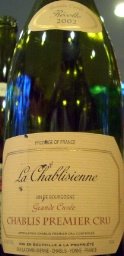
Even so, I came home with a great buy on white burgundy, inspired by Brooklynguy's recent wine tasting event experience: the 2002 La Chablisienne 1er Cru Grand Cuvee ($16.99) which is just becoming drinkable. I'm going to hold on to it for a while, though, just to remind myself that you have to buy wine like this whenever and wherever you find it. When it peaks in 5 years it will be very expensive if you can get your hands on it at all. I also purchased another bottle of the 2004 Bodega Norton Malbec Reserva ($12.99), another great buy on a great value red. I took a flyer on the 2003 Ferrari-Carano Siena ($16.69), a Sangiovese blend from the Alexander Valley. Don't know this wine, although I love Ferrari-Carano's Fume Blanc which has been an excellent wine for the money over the past few vintages. I've never had one of their reds, and with fall coming (slowly to be sure in LA) there is certain to be pasta in my future.

Perhaps the best bargains of all, however, came not in wine but in wine accessories and books. I picked up the new edition of Jancis Robinson's The Oxford Companion to Wine ($39.99). This is a huge encyclopedia of wine lore, nicely presented and surprisingly easy to read for a reference work. I will have to do a better review of it in an upcoming post, but Costco shoppers might want to be on the alert for it at their local branch as this is a pretty hefty savings off the retail. I also picked up some of those neoprene bottle holders by Built NY, which were tucked back next to the endpacks in the wine section. Good for toting wine to picnics because they both insulate and protect (the stuff is wetsuit material), they came in sets of 2/2 bottle and 3/1 bottle for $16.99 a set. Lots of folks are getting these at the holidays given the price!