Showing posts with label malbec. Show all posts

Monday, September 26, 2011

Autumn's Transitional Red

The temperature is up.
The temperature is down.
You want to use your grill once last time before you put it away.
You want to break out your crock pot.

If this sounds like you, then you need to have some Malbec on hand. Many people associate Malbecs with summer barbeques, but this versatile red is just as good with soups or stews as it is with grilled chicken or steak. In other words, it's the perfect transitional red!

A few reminders about Malbec: though today the grape is most associated with Argentina , it was once quite popular in Bordeaux and produces wines that remind me of French Cabernets and Merlots. Expect a rich, full-bodied wine that can hold center stage. And keep in mind that while some Malbecs can be big, fun fruit-bombs, others are far more restrained and can exhibit mineral and herbal characteristics.

Here are three Argentinian Malbecs I'm recommending this autumn:

2010 Colores Del Sol Malbec (suggested retail $12; available in market for $6-$12) This excellent QPR option has lovely, lush blackberry and boysenberry aromas. That fruity aroma profile is found in the flavors, as well, and there are additional notes of leather and spice which linger on after the fruit flavors fade. This Malbec will go well with grilled sausages, meats, chilis, and stews.

2008 Gauchezco Malbec (suggested retail $14.99; available in market for $8-$11) A more restrained example, with typical varietal characteristics, this wine has earthier, raisin, and black cherry aromas and flavors. With air there was a nice spicebox quality to the aftertaste, as well as some tobacco notes. Very good QPR at around $15, if you can find it for around $10 I think it would be excellent QPR for those looking for a more traditional taste.

2009 Argento Malbec Reserva (suggested retail $16; available in market for $14-$16). Don't be worried if the plum aromas are faint when you first open this wine. They develop nicely with some exposure to the air, as do the plum, blackberry, and tobacco leaf flavors. The tannins are drying, and will probably soften a bit with storage time. Also traditional in style, this would be particularly good with grilled or braised meat. Very good QPR.

Full Disclosure: I received samples of these wines for possible review.

Thursday, December 16, 2010

Affordable Holiday Sparklers

When I'm not indulging in dessert wine this month, I'm usually rooting through the cabinets for a bottle of sparkling wine. It's not something I save for special occasions--unless you consider a Tuesday night sufficient! More sparkling wine is sold in the US between Thanksgiving and New Year's Day than in the rest of the year. So what will you be drinking this month to put some sparkle in your life? Here are my recommendations for tasty, affordable bubbles for the holidays--and of course they're all under $20.

NV Jaume Serra Cava Cristalino Brut (suggested retail $8; available in the market for $5-$8). Quite possibly the most excellent QPR of any sparkling wine I've had this year, this is stunning value. The aromas and flavors tend toward lemon, toast and apple. There is a yeasty aftertaste, and a strong yet small bead. Delicious for the price.

NV Presto Prosecco Brut ($10.99, Whole Foods; available elsewhere for around $12)
I'm not sure I agree this is a dry enough to be brut, but it is delicious anyway with soft fruit, citrus, and yeast notes. The wine is very well balanced between acidity and richness. Very good QPR.

NV Roederer Estate Brut Anderson Valley ($19.99, Whole Foods; available in the market for $16-$20) You just can't go wrong with this classy, excellent QPR sparkler from the Anderson Valley. Rich notes of apple, hazelnut, and toast leave an appealing freshness in the mouth.

NV Gloria Ferrer Va de Vi Ultra Cuvée (just over $20 in my local independent grocery store; available in the market for $16-$22). The warm, pale yellow color of this wine is a good indication of the gentle wine within. Abundant mousse and fine bead sets up the aromas of pear and lemon. These elements are echoed in the flavors, and are accompanied by cherry and toast notes. Predominantly Pinot Noir, with some Chardonnay and a touch of Muscat. Very good QPR.

NV Laurens Crémant de Limoux Brut ($15.99 in my local independent grocery store; available in the market for $12-$18) Another reliably excellent QPR sparkler, this wine has a creamy mouthfeel and aromas of citrus pith and brioche dough. Creamy pear, apple, and lemon flavors are enhanced by tiny, frothy bubbles. Delicious and lively.

NV Vinos de Terrunos German Gilabert Penedès Brut Nature Reserva ($14.99, domaineLA; available in the market for around $13) This excellent QPR sparkler has an aromatic profile reminiscent of French Champagne: yeast, lemon pith, mineral. Brightly intense lemon and bread dough flavors with lively bubbles.

NV Latitude 50 Pinot Noir Spatburgunder Sekt ($16.99, domaineLA; available in the market for around $15) This very good QPR dry sparkling wine is pale rose in color. Faint aromas of wild strawberry and bread dough lead to a rich, round-tasting strawberry flavor accented with notes of toast and clay.

2008 Reginato Malbec Celestina (suggested retail, $20; available in the market for $17-$20) Unlike any other sparkler I've had, this is very dark in color--like watered-down pomegranate juice. The flavors are quite fruity, with lots of raspberry and a hint of deeper plum as well. There is a dry finish, making for a delicious, seasonally appropriate cranberry-colored sparkler for holiday toasts.Very good QPR.

Full Disclosure: I received samples of the Reginato and the Jaume Serra sparkling wines for review. The rest I purchased when out shopping in my favorite wine and grocery stores.

Monday, December 13, 2010

Dessert Wines for Drinking and Gifting

I don't drink much dessert wine between January and November, but something happens to me at Thanksgiving and between then and New Year's Eve I find myself longing for a glass of sweet wine, a good book, and some holiday music.

Dessert wines typically come in smaller bottles (usually 375ml or 500 ml, rather than 750 ml), although there are exceptions. They are perfect for four to five people to share after dinner, and survive on the counter or in the fridge with a cork in the bottle for 3-5 days if you don't finish them up.

Though they are a bit more expensive than most of the wines reviewed on this blog, 'tis the season for gifting and indulging, so I decided to do a roundup of some of the more affordable bottles I've enjoyed recently in case you wanted to give a friend--or yourself--a bottle.

NV Martini & Rossi Asti Dolce ($6-8/375ml and $8-11/750ml) A sweet sparkling wine from Italy, this is frothy with ripe peach and honey aromas and flavors. Would be very nice with any desserts involving orchard fruits, and is a glass of this on its own is a dessert in itself! Very good QPR.

2009 Susana Balbo Torrontés Late Harvest (suggested retail $30/500ml; click here to find retailers in your area who might have it) A winning dessert wine from Argentina, with great acidity and spice along with honeyed citrus peel aromas and flavors. The wine becomes more flowery as it warms slightly and gets some air. This is a little like a Sauternes in its balance between sweetness and bright acidity. Very good QPR.

N.V. Rotta Black Monukka Dessert Wine (available for $26/375ml; also available directly from the winery) Exceptional in every way, this may well remind you of old and rare Palo Cortados or Olorosos from Spain. Fantastic caramelized orange peel and toffee aromas and flavors are rich and pure. This wine would be superb with pumpkin pie, caramel desserts, or with a selection of aged cheeses. Highly, highly recommended and a steal for the price. Excellent QPR.

2008 Susana Balbo Malbec Late Harvest (suggested retail $30/500ml;
earlier vintages available for $22-$30/500ml) This smells and tastes just like the holidays with cinnamon, clove, orange peel, and anise aromas and flavors. The wine has a silky texture, and is much lighter than a port. Bright red fruit, with cinnamon--yes, cinnamon--running from the midpalate through the finish. Very good QPR.

2005 Château Doisy-Védrines Sauternes (available for $23-$26/375ml or
$36-$60/750ml). A lush, affordable Sauternes with characteristic apple, honeycomb, orange peel, and a touch of pineapple. This wine is still very young, and will continue to improve with age but it is drinking just beautifully now. Excellent QPR.

Full Disclosure: I received samples of the Asti Dolce, Late Harvest Torrontes, Late Harvest Malbec, and Black Monukka wines for review. All other wines mentioned were purchased by me in the market.

Friday, November 26, 2010

Malbec and Mole, or How to Transform Your Turkey Leftovers

I love turkey leftovers--the day after Thanksgiving. Then, I want nothing more to do with turkey, cranberry sauce, and mashed potatoes. I crave spice and warmth and something that will go with red wine. So what do you do with the leftover turkey? I'm too busy to make soup!

First, dive into your wine closet or go out and buy a nice, affordable bottle of Malbec, like the very good QPR 2009 Budini Malbec from Argentina's Mendoza region. (suggested retail $13; available for $9-$14) This smooth, berry-inflected Malbec has rich, spicy notes as well as subtle, integrated tannins. It reminded me of an extremely well-made, fruit-forward Cabernet but happily was not manipulated into something else. The fruit-forwardness of the wine and the juicy aftertaste make it capable of handling something rich and spicy, like the recipe that follows.

Then, head to the market and pick up two 16 oz jars of medium-heat Roasted Chipotle Salsa and a small bar of 70% Cacao Dark Chocolate.

You are now set to make a quick and easy turkey mole to go with some rice, or some tortillas, or even some crusty bread. Butternut squash that has been peeled, cubed and tossed with olive oil, salt, and pepper before putting it into a 450 oven for 15-18 minutes is good, too.

Quick and Easy Turkey Mole
Note: I adapted this recipe from a Wegman's recipe that calls for various Wegman's proprietary ingredients not available where I live. No leftover turkey? A rotisserie chicken works just fine.

1. Head a large skillet over medium-high heat. Add your leftover turkey (on the bone is fine, or large chunks of leftover meat. If the skin is still on it, you will want to cook it in a skillet on medium heat a bit to crisp up the skin and render the fat.) Cook for 3 minutes, turning once in the middle of the cooking time. Remove turkey and reserve.

2. Put 1/2 cup of water in the pan and scrape up any browned bits on the bottom. Reduce heat to medium. Add 1 tsp cinnamon and the 2 jars of salsa. Simmer, covered, over medium-low heat for 15 minutes. Remove lid, and cook for a further 6 minutes or so until the liquid is reduced a bit.

3. Reduce heat to low. Then add 1.5 oz of the chocolate, chopped into small pieces. Stir until melted.

4. Return turkey to pan and warm through on low for 8-10 minutes. Add salt and pepper to taste.

Serve with a nice glass of Malbec, some accompaniments like squash/rice/bread, a cool salad of avocado, tomato, and red onion and you are all set.

Full Disclosure: I received a sample of this wine for review.

Thursday, July 08, 2010

Looking for Grapes In All the Wrong Places

People have different ways of locating good wine values. Some shop the sales, while others haunt the box stores. A few turn their backs on their favorites--Pinot Noir, Cabernet Sauvignon, sparkling wine--and settle for something they're less fond of hoping it will suit their tastebuds.

My number one budget strategy (other than finding yourself a good wine retailer who will get to know your taste in wine and can steer you away from costly errors) is quite simple, can be done in any store, and is neither a strategy based on abstinence or rock-bottom clearances. Here it is:

Look for grapes in all the wrong places.

Certain regions become justifiably famous for producing a single grape--like Cabernet Sauvignon in Napa, or Pinot Noir in the Russian River Valley--and this means that growers can command the highest prices for their wines. But Cabernet Sauvignon is not the only grape grown in Napa Valley. Trust me on this. Napa Valley Sauvignon Blanc and Riesling (rare, but it's there!) are excellent and represent excellent value, too, because really, when is the last time you heard anybody ask "Do you have any Napa Riesling??"

Here are a few of my recent finds that fit the "great grape in a surprising place" mantra for wine value.

Verdelho, Albariño and Grüner Veltliner--From Clarksburg: Dancing Coyote may just be the greatest value wine producer you aren't drinking--yet. But if you see a cavorting coyote on a wine label, buy it and try it. You are going to be amazed at the taste and quality inside the bottle. Dancing Coyote is in Clarksburg, CA along the Sacramento River delta. I tasted a number of their wines (and reviewed their Petite Sirah a little while ago) and all of them were impressive. The whites were especially excellent QPR, however, and made with grapes that are normally associated with the Iberian Peninsula or Austria. The 2009 Dancing Coyote Verdelho (suggested retail, $10.99; available for $8-$14) was fresh and clean, and had well-balanced flavors of apple and lemonade with a bit of spritz. Try it with some spicy shrimp and chorizo kebabs for a fast weeknight supper. The 2009 Dancing Coyote Albariño (suggested retail $10.99; available for $8 -$10) had loads of green apple flavors and aromas, with citrus threaded through. And the 2009 Dancing Coyote Grüner Veltliner (suggested retail $10.99, and available through the winery) is a terrific example of domestic Grüner Veltliner, with typical grapefruit, lentil, and dust aromas and flavors. A bit more full and round than an Austrian example, this went well with pasta with ham and asparagus.

Pinot Gris from Australia: When you think Pinot Gris you may think Alsace or even Italy--but not Australia. The 2009 Innocent Bystander Pinot Gris from Australia's Yarra Valley (suggested retail $15; available between $13 and $23) demands you reconsider this notion. It had a distinctive aroma profile of muted mandarin orange and nectarine. The flavors included notes notes of white nectarine, white peach, and Meyer lemon. Nicely balanced between fruit and acidity, this was an excellent QPR winner from Innocent Bystander.

Chardonnay from Italy: When I think Chardonnay I think California or France--not Italy. But Italy makes some beautiful Chardonnay, including the excellent QPR 2008 Tormaresca Chardonnay from Puglia (available for between $9 and $13). Straightforward, clean pear and apple aromas and flavors, with slight citrus inflections and no discernible oak, which was a nice change of pace. It was terrific with Ina Garten's Szechuan peanut noodles.

Malbec from California: Americans have finally discovered Malbec, which is a good thing since it's a terrific red grape with roots that extend back into French viticultural history. Now, Malbec is most often associated with Argentina, but it's grown in California, too.The 2008 Red Rock Winery Malbec Reserve is an exceptional Malbec for the price (suggested retail $10.99; available for $8-$14), with a "blue" flavor profile of blueberries and huckleberries. The aromas are accented at first with white flowers, and a nice note of baking chocolate enters into the aftertaste. For $11? Excellent QPR.

Full Disclosure: I received these wines as samples.

Monday, June 28, 2010

Mighty Fine Malbec

Malbec just tastes right this time of year. In the summer, I always try to keep a few bottles on hand for cookouts, and whenever I go shopping there always are new bottles I want to try.

This wine, though, counts as a familiar favorite--one of those wine friends that we know we'll enjoy spending time with. The 2008 Clos de los Siete Clos de Los Siete is made by Michael Rolland from grapes grown in the Mendoza region of Argentina. This rich, smooth blend traditional Bordeaux grapes (suggested retail, $19; available for $15-$20) including not only Malbec but Cabernet Franc and Cabernet Sauvignon, has excellent QPR with its plum, herb, and espresso notes. There is some smokiness in the aftertaste, making it a wonderful partner for grilled food such as steak, chicken, pork, and sausages.

Malbec goes very well with Mexican cuisine, and we had it with Chile-Spiced Skirt Steak Tacos. The Ancho and Chipotle chile powders in the marinade add a rich, flavorful dimension to the meat that is perfect with a rich, smoky wine like the Clos Los Siete.

Full Disclosure: I received this wine as a sample.

Wednesday, March 31, 2010

Red Wines from the Southern Hemisphere

Last week was the vernal equinox, the point in the year when the days are as long as the nights. This year, celebrate spring by drinking wines from the southern hemisphere. Below the equator, they are celebrating fall and looking forward to the cooler temperatures of winter. Here, we've got other things to look forward to: warm sunshine, the first cookouts of summer, the last pots of stew to keep the chill away during the spring rains. Red wines from Argentina and South Africa go well with all these foods and more, with their warm, spicy, fruity profile.

Here are my recommendations for very good QPR wines including a Malbec, a Cabernet Sauvignon, and a Shiraz-Pinotage Blend that will help you bridge from winter to spring to summer without missing a step.

2007 Bodega Septima Cabernet Sauvignon (suggested retail, $12; available for $7-$12) From Argentina, this luscious Cabernet has aromas of warm baking spices and currants, touched with herbal notes. The flavors are rich, too, with coffee and currants predominant. There is good acidity, and a juicy aftertaste. Drink now, or set aside for 12-18 months.

2008 Sebeka Shiraz-Pinotage "Cape Blend" (suggested retail, $7.99; available for $6-$8) This blend from South Africa features currant and plum aromas and flavors, accented with espresso and baker's chocolate. Like most red blends, it will pair nicely with a variety of foods including burgers, chili, and grilled chicken. Drink over the next 9 months.

2008 Diseño Malbec (suggested retail $7.50; available for around $9) Always a reliable choice in affordable Malbecs, this bottling has floral, blackberry, and truffle aromas. The blackberry and mocha flavors are silky in the mouth. At present the tannins are slightly drying, so give it some air if you're drinking it now or set it aside to drink over the next two years.

Full Disclosure: I received these wines as samples.

Thursday, October 08, 2009

Mighty Good Malbecs

I was reminded last week of why I love Malbec. It's got the richness of Syrah, with some of the tannic structure of Cabernet. While the former can sometimes be too jammy, and the latter too austere, Malbecs are just right for pairing with a wide variety of foods. And with many of us turning off our grills and heating up our ovens, it's worth pointing out that Malbecs are great with autumn stews and soups.

Here are some of the best Malbecs I've tasted recently--and they are in the market at a variety of price points under $20.

2007 Trumpeter Malbec. Made by Argentina's Familia Rutini, this is a simple, pleasant, well-priced Malbec. For under $10 you get aromas aromas of roasted coffee and plum. The flavors are dominated by black cherry, coffee, and toast, and there is a juicy, tannic finish. Expect this wine to be slightly drying in the mouth when sipped on its own, but it shines with food. Very good QPR. (available in most markets for under $10)

2008 Don Miguel Gascón Malbec. Bodegas Escorihuela Gascón has a new label for their popular wine, but there's still the same very good QPR wine inside. You'll start off smelling blackberry and blueberry, along with a strong hit of coffee. The berry fruit continues through the flavors, and there is a distinctive mocha aftertaste that makes it well worth the under $15 price tag. (available in most markets for around $14)

2007 Alamos Selección Malbec. A terrific Malbec from Bodega Catena Zapata with aromas of blackberry, violets, and spice. The flavors are nicely layered, and include black cherry, fennel, and more violets along with a pleasant leathery note. Satiny tannins and refreshing acidity round out this wine. Excellent QPR for this unusually complex bottling under $20. (available for $12-$20 in most markets)

If you think Malbecs only pair well with grilled red meat, think again. We had our Malbecs with some Asian-style drumsticks. The sticky glaze made with hoisin and chili sauces was delicious, and a perfectly robust counterpoint to the wines. The 5-Spice in the recipe accented the leathery and floral notes in these wines, and the plum and berry fruit profiles provided a juicy counterpoint to the assertive flavorings.

Full Disclosure: I received these wines as samples.

Wednesday, June 17, 2009

Which Wine? Twitter Sommeliers on BBQ Chicken and Coleslaw

Last week I was getting ready to put some chicken on the grill. I'd already made some coleslaw, and had the tomato-based spicy sauce ready to lather onto the birds. (photo by vbalchen)

Which wine?

I was feeling uninspired. There was only one thing I knew for sure--I didn't want Zinfandel. Not that I have anything against Zinfandel. I just wanted something different.

So I got on Twitter and asked folks to suggest a grape that might go with this dish. My Twitter sommeliers' suggestions included the following: Rosé, Viognier, Syrah, Malbec, and Sangiovese.

You can imagine the rest. I opened up a bottle of each and tried them out with the meal. Dinner proved to be a challenge because the BBQ sauce on the chicken was spicy and slightly sweet. The coleslaw, on the other hand, was earthy and tangy. Here are my tasting notes for the wines I drank, and they include verdicts on the food pairing--and suggested alternatives.

2007 The Crusher Wilson Vineyard Viognier (suggested retail $12.99; available from $11-$16.50) From a partnership between Don Sebastiani & Sons and Clarksburg's Wilson family, huge honeysuckle aromas greeted me on first opening this wine, followed by hay, citrus, and honey flavors. The wine was creamy in the midpalate, with a bright, zingy finish. Very good QPR at $13, but it wasn't a great match with the chicken or coleslaw. It would, however, be sensational with lemon-garlic grilled chicken, or some grilled fish or shrimp.

2007 Dievole Dievolino Toscana IGT (suggested retail $9.99; available for $9-$10) This Sangiovese was bright ruby in color with sour cherry and earthy aromas that are a bit shy at first. The sour cherry and raspberry palate has chalky tannins and an earthy aftertaste. Very good QPR for those looking for a traditional Sangiovese, but it wasn't a great match with the chicken or the coleslaw since these foods tended to accentuate the earthiness and pull the wine out of balance. Instead, think of pairing it with grilled mushrooms or some smoky sausages for a great outdoor dinner.

2005 Barton & Guestier Rosé d'Anjou (suggested retail $9.99, and available for that price)
This wine was made from Cabernet Franc grapes and was a lovely salmon pink in color. Honeycomb and raspberry aromas made for an enticing start, and this was followed by a strawberry and raspberry palate. The wine was a hair off dry--so it would be very nice with spicier foods than the chicken I was serving tonight. This wine was the best partner for the coleslaw, too. The fresh berry flavors were a nice counterpoint to the salad's earthiness. Very good QPR.

2007 Substance Malbec (suggested retail, $18; contact the winery for more information) This Malbec from Washignton State's Columbia Valley was excellent. A deep, dark Malbec with blueberry and blackberry aromas, it had a satiny texture and rich, fruit-forward taste with great underlying mineral notes. Nicely peppery aftertaste, too. This wine was the best partner for the chicken, and brought out the sweetly spicy BBQ sauce to perfection. Excellent QPR.

2006 Black Sheep Finds Syrah Hocus Pocus ($17.99, domaine547; available for $16-$21) I look forward to the new vintage of this wine every year, and actually managed to hold onto this bottle for a bit to see how it would develop. Though purchased at the end of 2007, it's drinking just beautifully now and has lovely fresh aromas of plum blossom, plum, and berry. Layers of allspice, cinnamon, and a hint of cloves add to the fruit and there is a nicely peppery finish. Lovely example of the grape, excellent QPR for a quality Syrah, and the appellation, and another great vintage from Black Sheep Finds. This wine was the best partner for BOTH the chicken and the coleslaw as it had just the right blend of sweetness and spiciness to marry with the dishes.

Thanks to all my friends on Twitter for serving as virtual sommeliers for the evening. It was so much fun I'm bound to do it again.

Full Disclosure: except for the Hocus Pocus Syrah, the other wines tasted were samples.

Monday, May 04, 2009

Stylish, Affordable Malbec

Stylish is one of those wine words that critics use in all sorts of ways. When I describe a wine as "stylish," it doesn't mean that the wine is trendy. Instead, it mean that the wine has classic flavor profiles with all the right accessories--in terms of aromas and aftertaste--to convince you that you are drinking a well-made, varietally-correct bottle. It has to have complexity, a certain charm, and of course it always helps if you can get it for a great price.

I found just such a bottle in the 2007 Diseno Malbec. (suggested retail $12.99; available for $8-$19) It had abundant aromas of blackberry, black tea, and flowers. Right away I was taken with the wine, given the complexity of the layered smells wafting by my nose. There was bright blackberry fruit in the center, with nice acidity that cried out for food and gave this wine a lot of lift. The aftertaste had deeper, darker notes of black tea, tobacco, and violet to keep it all interesting from one sip to the next. Excellent QPR.

Malbec is terrific with grilled steak and some traditional sides like baked potatoes or french fries. This would be a great wine to have on hand if you are preparing your grill for the first trial run of the summer. The wine has enough acidity to hold up to most anything you have to accompany your steak, and the rich flavors will pick up every nuance in the grilled meat.

Full Disclosure: I received this wine as a sample.

Wednesday, April 01, 2009

No, This Is Not a Joke: Malbec from the Loire

Happy April's Fool Day. Today I've got a wine that seems like a joke, but isn't. It's a Malbec from the Loire Valley of all places.

When I think Malbec I think of sunny South America, but the grapes for this wine come from one of France's cooler viticultural areas. In France, they call Malbec Côt, and it's been grown in France for centuries. To find out more about Côt, check out these articles on AbleGrape.

The 2005 Mikael Bouges Les Côts Hauts was deep purple in color and had grapey aromas and flavors. Overall, I found it rustic and a bit thin. I was expecting something green and tannic, but instead all I tasted was blue and purple.

I got this wine from Garagiste for $11.83--and I must say that I felt I paid too much for this wine. If it had been around $8, I might have felt differently, but at this price it represented poor QPR.

Of course, I bought it for the curiosity value--Malbec from the Loire? If you are interested in tasting a Côt wine, there are plenty available in the market for between $8 and $30. If you take the plunge, let me know how it turns out. I'd love to know if this Côt was typical, or if I should give Côt another try.

And if you're looking for some more April Foolery, check out The Dregs Report, a tongue-in-cheek look at the world of wine.

Wednesday, February 11, 2009

Mysterious Meritage

In your travels you might see wine labeled "Meritage" and wonder --not surprisingly -- just what it is.

Meritage wines are California's answer to Bordeaux blends and to labeling restrictions that require at least 75% of a wine's juice come from a single grape (like Cabernet Sauvignon) in order that it be labeled Cabernet.

In Bordeaux, however, where fabled and sought-after reds and whites are produced, the blend of juice in a wine is often much more even--say 60% Cabernet and 40% Merlot. These wines are simply labeled "Bordeaux" after the place they were made.

Here is the US, where bottles made with a single variety are the norm, consumers have sometimes looked askance at blended wines and assumed they represented lesser quality. Not so, says the Meritage Association, an organization founded in the US in 1988 to promote and produce blanded wines in the Bordeaux tradition. Blended wines can provide wine lovers with greater complexity, age-worthiness, and also a more affordable price--so what's not to like?

I recently tried two very good QPR Meritage blends that I think warrant a second look if you are looking for an affordable red blend that will go well with winter foods such as soups, stews, casseroles, and roasts.

The 2006 Hayman & Hill Meritage Reserve, for example, is made from a blend of 43% Cabernet Sauvignon, 25% Merlot, 15% Malbec, 11% Petit Verdot, and 6% Cabernet Franc fruit from Monterey County. (sample; available from $12-$17) Upon first opening, I smelled the traditional Bordeaux aromas of cassis, plum and spice. Flavors of plum turned more towards cherry as you sipped, and there were some oaky notes and good acidity. Over time, with air, the flavors became much richer and plummier and developed milk chocolate notes. I would expect this wine to improve over the next 12-18 months, although it is delicious now.

The 2006 Robert Mondavi Private Selection Meritage, on the other hand, is made with 72% Cabernet Sauvignon, 10% Merlot, 10% Petite Verdot, 7% Malbec, and 1% Cabernet Franc fruit from California. (sample; available for $8-$11). This is a very new release and was a bit hot upon first opening, but at 13.5% alc/vol I think this is a sign of youth. Once again I smelled the typical Bordeaux aromas of cassis and plum, and the flavors are dominated by rich plum. There are vanilla and mocha notes in the aftertaste which added complexity and contributed to the enjoyment of this easy-drinking red.

If you haven't tried Meritage and like Cabernet Sauvignon or Merlot, you should give one of these blended reds a try.

Thursday, January 15, 2009

Friday Nights IN: Basque Food and Argentinian Wine for a Crowd

Friday Nights IN is a regular feature at GWU$20 that's intended to trim a few dollars from your entertaining budget by replacing a meal out with a meal in. Some suggestions are dinners for four, six, eight, or even ten. Some are for romantic dinners for two. And some suggestions are perfect for when you need time to yourself!

This week's Friday Nights IN suggestion is to have a crowd over and cook a hearty, soothing, flavorful meal inspired by the cuisine of the Basque region with an opulent wine from Argentina. How many is a crowd? Well, that depends on you, but the recipes below feed 10 people. With that many people heading over, why not let other guests bring the salad, the dessert, the appetizers, and some bread? Of course, you can always half the recipe. I did, and it worked just fine! The estimated cost for this main dish? $43. For ten people. Try to get that much bang for your buck in a restaurant.

The Recipe: a Basque-inspired dish of tender chicken braised in a piperade sauce, served alongside some homemade steak fries tossed with Spanish smoked pimenton? Food & Wine featured this recipe in their January 2009 issue. This is an absolutely delicious meal that tastes like restaurant food and is easy and inexpensive to make. In our house, it won the highest recipe rating, "repeater," which is reserved for those meals that we would be happy to see over and over again.

The Wine: with such a flavorful meal, you want a flavorful wine. I'd suggest the very good QPR 2007 Clos de los Siete by Michael Rolland (available for $12-$20). This wine is still a bit young, so I'd open it and pour it in the glasses about 30 minutes before you sit down to dinner to make the most of its plummy aromas and flavors. In addition to the plums, expect to smell some licorice. The treats continue in the flavors, where raisin and fig notes complement the opulent plumminess of the wine. This wine is blended from Malbec, Merlot, Cabernet Sauvignon, and Syrah grapes and takes much more complex than its price tag would suggest. With ten people coming over, you will want to buy at least two bottles (that's one glass per person), and increase it from there if you want to pour second glasses.

Full Disclosure: I received this wine as a sample.

Wednesday, October 29, 2008

Malbec: Argentina's Signature Red

I came back from the first Wine Bloggers Conference in Sonoma this weekend and there was one thing I knew for sure: I didn't want to drink any California wine. I needed a change. I caught up on my mail and read the backed up blog posts in my RSS reader and inspiration hit: I was going to drink an Argentinian Malbec.

This inspiration stemmed from two of the people I met at the conference (though I've known them via the blogosphere and Twitter for some time now): David from the blog Vinomadic, and Philip James from the wine finder and keeper site Snooth. David lived in Argentina for a time (and always gives me good suggestions on what to drink), and Snooth just had a tasting dedicated to value Malbecs. I enjoyed talking to both of them this weekend, and that was enough to send me scurrying to the cellar in pursuit of an Argentinian Malbec.

The wine that I pulled out was the 2006 Finca Las Moras Malbec Reserva (sample; suggested retail for this new release is $12; you may find it or other recent vintages near you for between $7 and $12) This wine was a simple pleasure from start to finish, because it was made in an apologetically New World fruit-forward style, but with some sensitivity and restraint. Malbec is often described as fitting somewhere between Merlot and Cabernet Sauvignon in the flavor spectrum, but what I always think of is plums--lots and lots of plums. The 2006 Finca Las Moras Malbec Reserva did indeed have prominent aromas of plum, leather, and vanilla. These aromas were echoed in the flavors of plum and spice, and there was also a nice meaty note that gave the wine some depth of complexity. Very good QPR for this wine brought into the US by Joshua Tree Imports, who are known for their good value brands such as Razor's Edge and Fetish.

I love lamb with Malbec, and so we had this with Lamb Chops and a tomato-and-potato gratin. If you are vegetarian, I highly recommend making the gratin, and having it with some meaty grilled portabello mushrooms instead of the lamb. Whether you go with meat or a meatless option, you'll find that the meaty, leathery aromas and flavors will get drawn out by the grilled food and the beautiful plum fruit will be a nice complement to the earthy potatoes and sweet tomatoes.

Thanks to David and Philip for helping me get inspired about wine all over again. See you next year at the Wine Bloggers Conference!

Wednesday, November 07, 2007

How do You Malbec?

Malbec is a big, blue, brawny red wine that is most often associated with the Mendoza wine region of Argentina, even though its roots can be found in Bordeaux, where it was used for centuries as a blending grape. I've had two different kinds of Argentinian Malbec. One is soft, fruity, and plush. The other is surprisingly complex, with herbs, leather, and mineral notes mixed in. No matter what kind of Malbec you prefer, there are bottles out there for under $15 and they are wonderful red wines for fall because they go with such a wide range of soups, stews, and roasts.

Take the 2005 Kaiken Malbec for instance. ($8.99, Costco; available from other merchants for $8-$15) This was a malbec that was soft, lush, and pleasantly easy to drink. There were huge blackberry and blueberry aromas that were so clear and distinct there is no way anyone could take a sniff and say "I can't smell anything but wine." The wine tasted plush, and had a thick, velvety texture. There was a fair amount of oak mixed into the blackberry fruit flavors that dominated this wine. Some might call it a simple fruit bomb, but it was awfully tasty and I thought it represented good QPR.

A completely different Malbec drinking experience was had when domaine547 gave me a sample of the 2006 Bodega Renacer Punto Final Malbec to try ($13.99, domaine547). This was fruity, to be sure--but it was no simple fruit bomb. Similar aromas of blueberry and blackberry were accompanied by notes of leather and anise which made for a combination of smells that was rich, deep, and autumnal. The berries and spice aromas were echoed in the flavors, but the wine had additional notes of herbs (I thought I tasted eucalyptus, but others described it as mint) and a tight mineral twang. I wondered if it was still a bit too young to reach its full potential, but given its complexity the extra $5 was worth it to me and I thought for under $15 this was excellent QPR for a surprisingly complicated wine. Bodega Renacer makes a reserve version of this wine, too, which I've never had. If you've tasted that, please leave a comment and let us know how it compared to the regular, "classic" bottling pictured here.

We drank these wines at dinner party with grilled steaks and all the sides you would get in a steakhouse. The Bodega Renacer Malbec was drained long before the Kaiken Malbec, so I definitely think it was the wine that the six of us preferred. No matter whether you like your reds soft and fruity, or complex and meaty, there is a Malbec for you at a price you can afford. How do you Malbec?

Monday, July 16, 2007

Argentinian Rose

I've been drinking a lot of roses this summer, starting back in April with Catavino's virtual rose tasting. I haven't had a rose from Argentina, however, so I recently searched around for one, and found this delicious example (behind a very stylish label) at one of my favorite wine stores.

The 2006 Bodega Terza Malbec Rose Volta was a really delicious wine ($10.95, Chronicle Wine Cellar; available from other merchants for around $15). It had a striking deep rose color, as the picture shows. Made from 100% Malbec, which is known for its rich plum flavors and tannins, in a rose wine such as this the tannins were softer and the fruit was raspberry rather than plum. Aromas of berries and rose petals lifted from the glass as you took your first sip, and then there were floral, raspberry, and strawberry notes in the flavors. The wine had an interesting, silky texture that gave it a rich, full mouthfeel but the wine finished dry nevertheless. Excellent QPR at this price, as has been the case with many of the roses I've had this summer.

Rose wines are such versatile food wines, I almost hate suggesting a pairing as they go with almost anything. But we had it with a sun-dried tomato crusted chicken dish that involved a bread crumb and sun dried tomato mixture that was applied to pounded chicken breasts dredged in flour, then egg, then the crumbs, then pan fried. A zingy sauce was served with it, and I'd combine it with some simple orzo or fettucine tossed with the sauce and some steamed broccoli to complete the meal. This was a delicious companion to the wine, and the dish picked out the berry notes in the wine very well.

After years and years of avoiding all rose wines because they were being made in a sweet, white zinfandel style, I'm so happy that roses are becoming popular again here in the US and shedding their negative image. With great wines like this, that are so versatile and affordable, it's easy to see why. And our friends at domaine547 are making roses even more affordable this week with a sale on their scrumptious roses, so if you haven't seen what all the fuss is about with these "new roses," why not check out their offerings and try one for yourself?

Friday, April 20, 2007

Winery Watch: Red Head Ranch

This is the fourth in a series of posts highlighting California family wineries. You might not be familiar with them--yet--but they produce wines that speak with the voices of this state's people, places, and history. They are worth seeking out. These posts will be longer than most posts on the blog, but I hope you will find them perfect for leisurely weekend reading and internet browsing. Have fun! To read previous posts in the series, click here.

Gentlemen may prefer blondes (though I've never been absolutely convinced about that).

But grapevines adore redheads. Or at least they adore this redhead, Marilyn Ashkin. (photo courtesy of Red Head Ranch)

I know this because I've tasted some of the wines from the Red Head Ranch portfolio, and they are astonishing. It's rare to taste wine and still be able, weeks afterwards, to remember what struck you so forcefully about one producer's wines. But I can remember exactly what blew me away about Red Head Ranch wines at the Family Winemakers Tasting in March: they have elegance, silky texture, powerful flavors, and balance. Think Rita Hayworth. Can you see her in your mind? OK, Red Head Ranch makes Rita Hayworth wines.

When I met Marilyn, she was standing proudly behind her lineup of wines, with her son at her side. She had a quiet dignity that I think is linked to the enormous respect that she has for the wine she makes, and the people who make it with her. At the tasting, she was the first to give credit to her consulting winemaker, Steve Glossner, for his skill. And on the website, the members of the Red Head Ranch family are highlighted, and their individual contributions noted, from her husband Peter (the CEO or "Chief Equipment Officer), to business partner Leon Chen, manager Darrel Heirendt, supervisor Rodrigo Lamas, and vineyard workers Leopoldo H. Mendez and Leopoldo Mendez, Jr. This is truly a modern family winery--in the very best sense.

Peter and Marilyn bought the Red Head Ranch in Paso Robles 1997, becoming custodians of historic vineyard properties that date back to the 1880s. One of Marilyn's passions is the care and feeding of "Grandma," one of the vines that remains from those first plantings which she tended and brought back to flourishing life. Since then, the Ashkins have been able to purchase the Beckwith Vineyard in 2001, and to partner with Leon Chen at the Old Bailey Vineyard.

Red Head Ranch's wine making philosophy is apparent from the moment you visit their home page. They think the essential ingredients of their wine are: passion, quality, perseverance, excellence, community, family, sharing, history, and fun. What a great way to express what you do, and what you think is important. And it's a philosophy that I can embrace with enthusiasm. They seem to practice what they preach, too. Never have I seen such happy faces in a vineyard photo album--even during the hard but rewarding work of harvest and crush. (photo courtesy of Red Head Ranch)

On to the wines. The 2004s I tasted, and which are reviewed below, are Red Head Ranch's third bottlings. Currently, Red Head ranch is selling these wines in multiples of 3 bottles through their online store. Clicking on any of the wine names below will take you to the appropriate page in their store, where you can learn more. Red Head Ranch also has a wine club, which would enable you to get a half-case sampler every six months at a reduced, members-only price. Of course, if you want to try their wines you can also heckle your local store to carry them--I'm lobbying my local shops, I assure you!

2004 Red Head Ranch Cabernet Sauvignon ($29). I loved this wine--and at the price it represented excellent QPR. 75% Cabernet Sauvignon grapes are blended with 25% Petit Verdot to produce a rich, full-bodied wine. Abundant aromas and flavors of cassis and coffee are accompanied by a distinctive note of pencil shavings that is more common to fine Bordeaux than New World wines. Unfiltered, this is an outstanding old-world style cabernet blend.

2004 Red Head Ranch R3 ($24). An intriguing blend of three varietals: Syrah, Cabernet Sauvignon, and Malbec. The amazing thing is, you can taste all three! This is a blend with brains--not a single blurred or mushy note mars it. Red fruit aromas turn into a cascade of plum, cassis, and smoke. Excellent QPR for this easy drinking red, which is again marked by a lovely silkiness of texture.

2004 Red Head Ranch Pinot Noir ($28). No, I did not type Pinot Noir by mistake. Paso Robles Pinot? A relative rarity, but Red Head Ranch proves it can be done! Pinot Noir is a showcase varietal for Red Head Ranch's ability to make silky, elegant, and balanced wine. Here the flavor profile is dominated by cherries, with notes of mushroom, earth, roast coffee and cocoa to keep the wine interesting. Excellent QPR on this complex pinot charmer.

2004 Red Head Ranch Cabernet Sauvignon Old Bailey Vineyard ($40). This outstanding young cabernet is made entirely of Paso Robles fruit from the Old Bailey Vineyard, where the varietal is Leon Chen's passion. That passion shows in this wine, with its bright red fruit aromas and flavors accented by cocoa and dark chocolate notes. This is still a young wine, and needs some time to settle down and show to its full potential. I suspect this will grow into a signature wine for the Ranch, one that has great balance with that distinctive RHR silkiness and finesse. Only 150 cases were made of this very good QPR cab, that would certainly qualify as a special occasion wine.

Red Head Ranch also bottles Zinfandel (both Late Harvest and regular), Chenin Blanc, and Petit Verdot. I didn't taste these wines, but if you have please leave a note and let us know. Meanwhile, remember that gentlemen may prefer blondes, and perhaps even marry brunettes, but if you want to be where the grapevines are, stick to Red Heads.

Next Week: Vinum Cellars

Wednesday, December 27, 2006

A Sugar Plum of a Wine: the 2003 Ferrari-Carano Siena

The 2003 Ferrari-Carano Siena ($16.69, Costco) is a red blend made up of Sangiovese, Malbec, and Cabernet Sauvignon with a touch of Petit Verdot. As I said in an earlier post, I prefer red blends that have a rhyme or a reason to them, and I cannot for the life of me figure this one out. The Ferrari-Carano website explains that to reflect their Italian heritage they blended Sangiovese with "Sonoma County's finest grapes." OK, but why? And why blend Sangiovese (plummy) with Malbec (more plummy)? A huge fan of their Fume Blanc wine, which is one of the great values in California Sauvignon Blanc, and their Syrah, I decided to give this red blend a try.

Despite my reservations, when I popped the cork and poured this wine into the glass it had a beautiful darkly reddish purple color to it. Sniffing the wine, I could detect aromas of black licorice candy and plums along with a slightly hot, alcoholic note. Drinking the wine brought out pronounced plummy flavors, with notes of cinnamon. This sweet and spicy wine has good QPR, with the plummy flavors characteristic of Sangiovese and Malbec (along with the Sangiovese cinnamon), but it is a bit pricey for a rustic red blend. I'm not sorry I had it, but I'm not sure I'd seek out another bottle, either.

We had the Siena wine with a traditional Italian dish done up the Jamie Oliver way: pollo alla cacciatora (aka Chicken Cacciatore). After pouring all of our remaining 2004 Big House Red over the chicken for a long slow marinade (the chicken is cooked in the marinade later), and combining a flavorful blend of tomatoes, anchovies, bay leaves, and olives it was popped into a low oven for 1 1/2 hours. It was rich, earthy, and pungent with all those anchovies and olives. This robust, saline fare was a perfect foil for the plummy sweetness of the Siena.

Sunday, November 05, 2006

Weekend Wine Tasting at Mission Wines

Mission Wines is doing it right. I had a great time at their weekly Saturday tasting. For just $10 you get five generous pours of a well-selected array of wines. And if you buy wine that day, the cost goes down to $5. Talk about excellent QPR! Saturday tastings run from 1 pm to 7 pm.

When I walked in shortly after 2, it was standing room only. There are only 6 stools at the bar--this is a small shop that prizes service and selection, not a wine warehouse--but this wasn't stopping people from ordering up flights, tucking themselves around the tasting bar's corner to talk to Dave (who was manning the operation), or drifting through the stores with their glasses looking at the wine. Mission Wines has a great atmosphere during its tastings. It's a neighborhood hangout where both regulars and newcomers of all levels of expertise from novices through serious collectors come to talk and drink wine.

On offer yesterday for the tasting were four wines under $20, and one under $30. While I do enjoy wine tastings that include sips of wine that are way out of my budget as a way to increase my knowledge this was great in a different way since theoretically everything I sipped I could conceivably purchase. The selection of wines was outstanding: 2 old world wines (a grenache and a gruner veltliner) and 3 new world wines (sauvignon blanc, pinot noir, and malbec).

Here were the wines and my brief tasting notes for them:

2005 Tobiano Sauvignon Blanc ($11.99): This Chilean sauvignon blanc exhibited textbook flavors of gooseberry and granny smith apples. No oak was used, allowing the fresh fruit flavors to come through. Excellent QPR.

2005 Wienenger Gruner Veltliner "Leicht and Trocken" ($15.99): Pale, almost translucent in color with vaguely citrus aromas and a hint of both greenness and spice. On the palate, it was mostly citrusy, and I couldn't detect any of the pepper or lentil varietal characteristics for which this wine is known. A neutral wine, at the price I felt it represented good QPR.

2005 Bodegas y Vinedos del Jalon Calatayud Vina Alarba Old Vines Grenache ($8.99): An appealing, bright garnet wine with aromas of black fruit and spice. On the palate you did get a bit of the characteristic grenache dustiness and smoke, with less fruit than the aromas would suggest. A great example of an old world, old vine varietal I thought this wine had very good QPR.

2005 Sineann Pinot Noir Oregon ($29.99): I was excited to taste this wine, but found it a bit disappointing. This was a wine that smelled better than it tasted, with interesting forest and fruit aromas. Once sipped, I felt it didn't really hang together and there was an undertaste I couldn't identify. This may well be a wine that is too young to be drunk right now, but I don't have any experience with Sineann pinot noirs--if a reader does, please let us know if this is likely to settle down because the aromas were very promising. At the price, and as it is drinking now, I felt this wine represented good QPR.

2003 Alto Cedro Malbec ($16.99): A very dark, plummy wine with whiffs of peppery spice tucked into the fruit. There was an interesting dried herbal note--black tea? tobacco?--that made it an interesting wine to drink. It would be great with grilled meat. For the price, this was a very good QPR wine.

Before I left I purchased a bottle of the 2005 Tobiano Sauvignon Blanc, which I felt represented the best QPR. All wines are available through Mission Wines, and the grenache and pinot noir look like they are widely available throughout the country. I know I'll be back to sample more great wines and to enjoy the welcoming atmosphere.

Friday, October 27, 2006

Saturday Wine Shopping--Friday edition

We needed parmesan cheese and sponges--what an excuse to go to Costco! No one in their right mind would go to a Costco on a Saturday if they could possibly avoid it, so I set out today. Because the local Alhambra warehouse has an uninspiring wine section, I decided to go to the hipper nearby demographic of Los Feliz and check out their warehouse's selection. Final assessment: it was better, but probably not worth the trip. I was clearly spoiled by 7 years of shopping at Costcos in Sonoma and Napa.

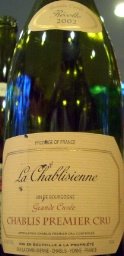
Even so, I came home with a great buy on white burgundy, inspired by Brooklynguy's recent wine tasting event experience: the 2002 La Chablisienne 1er Cru Grand Cuvee ($16.99) which is just becoming drinkable. I'm going to hold on to it for a while, though, just to remind myself that you have to buy wine like this whenever and wherever you find it. When it peaks in 5 years it will be very expensive if you can get your hands on it at all. I also purchased another bottle of the 2004 Bodega Norton Malbec Reserva ($12.99), another great buy on a great value red. I took a flyer on the 2003 Ferrari-Carano Siena ($16.69), a Sangiovese blend from the Alexander Valley. Don't know this wine, although I love Ferrari-Carano's Fume Blanc which has been an excellent wine for the money over the past few vintages. I've never had one of their reds, and with fall coming (slowly to be sure in LA) there is certain to be pasta in my future.

Perhaps the best bargains of all, however, came not in wine but in wine accessories and books. I picked up the new edition of Jancis Robinson's The Oxford Companion to Wine ($39.99). This is a huge encyclopedia of wine lore, nicely presented and surprisingly easy to read for a reference work. I will have to do a better review of it in an upcoming post, but Costco shoppers might want to be on the alert for it at their local branch as this is a pretty hefty savings off the retail. I also picked up some of those neoprene bottle holders by Built NY, which were tucked back next to the endpacks in the wine section. Good for toting wine to picnics because they both insulate and protect (the stuff is wetsuit material), they came in sets of 2/2 bottle and 3/1 bottle for $16.99 a set. Lots of folks are getting these at the holidays given the price!