Showing posts with label mourvedre. Show all posts

Thursday, July 29, 2010

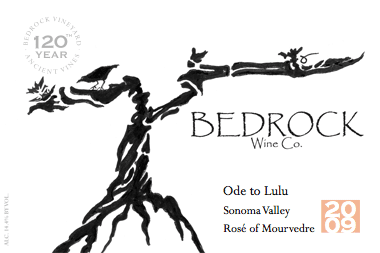
Ode to Joy, Ode to Lulu: a Rosé That Lives Up to the Hype

Sometimes, I can be very ornery. When there's lots of hype, I think, "Nothing is THAT good." Memorable occasions when I've been proven wrong were Chariots of Fire (still one of the best movies ever made) and Harry Potter and the Philosopher's Stone (goes without saying).

There's a rosé that's been getting a fair bit of hype lately, and when I saw a bottle of the latest vintage on the shelf at my local grocery store, I had to give it a try.

I'm glad I did, because it turns out the hype was merited. The 2009 Bedrock Wine Co. Ode to Lulu Rosé is a lusty, zaftig rosé that may make you hum Ode to Joy. ($19.99 in my local independent grocery store; available elsewhere for $17-$22) As I sipped this, it seemed to me that the high points the previous vintage received from major wine magazines might actually be a bit stingy. There were very dry aromas: just a waft of strawberry wrapped around lime zest and chalk. I got no watermelon candy taste at all--something I taste in a lot of rosés these days. Instead, there was strawberry fruit, with a lovely stoniness that kept it focused. This wine left a beautifully rich taste in the mouth, a nice nod at the Mourvedre grapes that went into the bottle. Excellent QPR.

Given its rich, dry flavor profile the Bedrock Wine Co.'s Ode to Lulu can stand up to a wide variety of summery fare, from BBQ ribs to grilled tuna salade niçoise, and from hot dogs to peel-and-eat shrimp with zesty cocktail sauce.

Thursday, April 23, 2009

In Training for Hospice du Rhone

Next weekend I'm off to the 17th annual Hospice du Rhône tasting, an event held in Paso Robles to celebrate Rhône varieties and the winemakers who use them to create world-class wines. I am something of a Syrah maniac (a tendency I try to keep under control here on the blog) and love Viognier, too, so I'm really looking forward to tasting and learning about these wines.

To get in training for the event, I participated in the Hospice du RhôneTwitter Taste Live last Friday. (I can't seem to locate any feed of the tasting notes, but you can read east coast co-host 1 Wine Dude's report here.) From Europe through several time zones to the west coast, this provided an opportunity to taste a number of wines that were made with Rhône varieties from all over the world. I focused on wines from Australia and the US, and made a particular effort to get a sense of the differences between the wines made in US regions.

Here are my favorites from the tasting, and some initial observations.


Rhône Reds Can Be Larger Than Life. We tasted some big reds. The one I liked best was the 2005 Kinton Syrah from Santa Barbara County. With a whopping 15% alc/vol, I thought it was still a balanced wine with aromas of pepper, plum, cherry, and roasted herb. It tasted of plums, roasted coffee, and mint, with some spice cabinet flavors in the aftertaste. This was a lot of wine, but if you are looking for a big red, look no further. (available for $15-$23; good QPR)


I Love Mourvedre--Young or Old. I sampled two Mourvedres, one young and one from the 2003 vintage. I loved them both. The youngster--the 2006 Tablas Creek Mourvedre from Paso Robles--was a delicious wine with meaty and spicy aromas and flavors full of lashings of plum and a nifty espresso aftertaste. This wine is delicious now--but I wonder what it will be in another six years. My experience with the 2003 Cline Cellars Mourvedre Ancient Vines from Contra Costa County makes me think it will be even more spectacular. I purchased this wine three years ago in and when I popped the cork I was greeted by delicious aromas of spice, earth, cherries, and plums. There was terrific spiciness in the flavors, with a backdrop of plums, black cherries, and chocolate. (find the Tablas Creek Mourvedre for around $35, very good QPR; find more recent vintages of the Cline Mourvedre for $13-$22, excellent QPR)

Don't Forget to Look North for Rhône Varieties: Two of my favorite wines Friday night came from regions I don't normally associate with Rhône varieties: northern California's Sonoma Valley and Washington State. The 2007 Anaba Coriol White from the Sonoma Valley was one of the most exciting white wines I've had this year. Made from a blend of 69% Viognier, 15 % Roussanne, 10% Marsanne, and 6% Grenache Blanc, this extraordinary blend had aromas of sea salt and fennel pollen that reminded me of a stretch of Coastal 1 I know very well, where the sea is on one side and wild fennel grows on the other. There were flavors of apples, honey, melon, and spice. I'd highly recommend this wine. So, too, would I highly recommend the 2007 Substance Counoise from Washington State's Walla Walla Valley. This wine had oodles of character, with aromas of rose petals, roasted herbs, and earth. The flavors were a mouth-watering blend of cherry, leather, grilled meat, and pepper with a spicy aftertaste. (the Anaba Coriol White is available for $32 from the winery, excellent QPR; the Substance Counoise is available for $18 from the winery, excellent QPR)

I'll have a lot more to say about the Rhône in a little over week, so stay tuned.

Full Disclosure: I received the Anaba and Substance wines as samples.

Wednesday, September 24, 2008

The River of Skulls: A Halloween Tradition, Since 2008

I've started a new, grown-up Halloween tradition.

I took a tasty journey down the River of Skulls, the latest special bottling from Twisted Oak. Yes, that's the label. See why it's perfect for Halloween?

The 2006 Twisted Oak River of Skulls is made from 90% Mourvedre and 10% Syrah. If you've found Mourvedre to be dusty and muddy in its flavors and texture, you clearly haven't tried this wine. This is a big red that's surprisingly light on its feet. It starts out with a bright ruby color. When you swirl it in the glass and then sip it, you will find it has a decadent, silky texture. I smelled cherry jam, cinnamon and baking spice--which gives it a very autumnal feeling. The flavors reminded me of cherry pie, allspice, and clove. Then I got a deliciously dark and smoky aftertaste that is in beautiful balance with all the fruit. But the best thing about this wine is the gorgeous, lip-smacking acidity. This is a wine with structure, and has the acidity that will make it age nicely over the next three to five years. If you can resist its considerable young charms right now, that is. Excellent QPR, even though it's a bit more than you might be used to spending on Mourvedre at around $35. But I can say without hesitation that it is also the best Mourvedre I've ever had, so it's well worth its price tag.

What to have with your River of Skulls? I tried a dish that is fast, and can reasonably fit a Halloween theme: a whole wheat spaghetti dish sauced with a lamb and cumin-spiked tomato version of the more traditional Spaghetti Bolognese. This pasta was robust, nutty, and aromatic--and therefore the perfect pairing for this bright, well-structured wine. The wine helped to keep the dusty cumin taste from getting to heavy, and the wine's acidity made it an ideal partner for the tomatoes. And Mourvedre and lamb is a match made in heaven. Try it when you get home from taking your kids trick-or-treating, or make a big batch and have your friends over for some River of Skulls and bowls of pasta to celebrate the night when witches and ghosts come out to frolic.

I received this bottle as a sample. If you want some, head over to the Twisted Oak website immediately and sign up for the allocation since there is limited availability due to the small number of cases produced. It will set you back between $28 (if you're in the Twisted Few wine club) and $35 a bottle (the regular price). As allocations go, this is a reasonable splurge. I'd suggest buying it in multiples now, while you can, so that you can have some this Halloween, and the next, and the next. I'm going to be really interested to see how this wine ages.

Why should the kids have all the fun? This is way better than a Twix bar. Trust me.

Wednesday, July 16, 2008

A Contradictory Mourvèdre Coco Chanel Would Have Loved

Coco Chanel, the legendary French couturier, is reputed to have said "my inner contradictions fascinate me." I think contradictions are a beautiful thing, both in people and in wine. Contradictions in a wine keep your brain cells firing while you're tasting as you try to figure out if you really taste leather and roses at the same time and, if you do, do you like that?

Mourvèdre is a grape that would make Coco Chanel proud. It has dusty and sweet flavors, flower notes, earthy notes--you name it, you can find it in Mourvèdre. It can be hard to find a 100% Mourvèdre, because it's most commonly used in blends with Grenache and Syrah. I happen to love Mourvèdre when it's bottled on its own, however, because all of its seemingly contradictory flavors and aromas can produce wines that please your intellect as well as your palate.

Lately I had the chance to try a 2006 Telmo Rodríguez A1 Muvedre from Spain's Alicante region. ($9.95, Chronicle Wine Cellar; available elsewhere for $10 to $17) This was an excellent QPR example of all of the glorious contradictions of which Mourvèdre is capable. It had Mourvèdre's characteristic deep yet bright garnet color and aromas of blackberry and marshmallow when the bottle first opened. These aromas gave the wine an initial, sweet impression, but the flavors were much leaner than the aromas suggested. While my mouth was set for a fruitbomb, instead I got black fruits, a touch of tar, and a slightly green and stemmy note in the aftertaste followed quickly by catch of rose petals in the back of the throat. The wine felt very satiny as you sipped it, but afterwards the dusty tannins made your mouth feel a bit dry.

Because of the drying tannins, this wine was much better with food than it was without it, and I wanted to find a recipe to try with it that would be just as full of contradictions as the wine. I located a new take on a classic Spanish soup from the Rioja region that used sweet potatoes and linguica instead of the traditional potatoes and chorizo. It was a little sweet, a little salty, a little spicy, and just delicious. The recipe calls for linguica, but I had chorizo on hand and substituted that for the linguica with good results. It was particularly good at pulling out the wine's fruity and satiny features, while the smoky notes of the sausage and the tarry note in the wine were good partners.

I loved this wine, but it will not be to everyone's taste. I am a fan of Telmo Rodriguez's wines in part because he makes such a wide variety of bottlings, from luscious fruity treats to wines like this one that are full of surprises. Even better, as this 2005 article by Food & Wine's Lettie Teague explains, Rodriguez is not ashamed to make value wines. So even if you don't give his Mourvèdre a try, keep on the lookout for the name.

AVIN8947916852397

Monday, June 09, 2008

Something Sinister This Way Comes

Last week we tried to watch Sweeney Todd on DVD. I say tried because our attempt lasted only about 7 minutes before we gave up. However, we did have the perfect wine with the movie--the 2005 Owen Roe Sinister Hand ($23.99, Mission Wines; available online for between $22 and $29)

The label shows the left hand of Irish hero Owen Roe O'Neill. Legend has it that when sailing around the coast of Ireland, a band of warriors agreed that whoever landed first could claim the land for his own. Owen Roe O'Neill cut off his own left hand, threw it on to the land, and swam ashore to claim the land as his own.

If you can think of a wine more appropriate for drinking with Sweeney Todd, let me know!

Despite the macabre story, the 2005 Sinister Hand was a lot of wine for the money and very good QPR. It is a Rhone-style red made from Grenache, Syrah, Mourvedre, and Counoise. There were beautiful aromas typical of the dominant variety in this red blend (Grenache) including berries and herbs. There was also a smokiness to the aromas, which carried through into the flavors along with even more juicy berry. There was a long, lingering aftertaste and a smooth and plush feeling to the wine that made it seem luxuriant and rich. This was a very enjoyable wine, and a wine that was definitely worth the few dollars over $20 that it cost.

We had our Sinister Hand with BBQ ribs and a big salad. The smokiness of the ribs highlighted the nicely smoky flavors and aromas in the wine, and the sweetly spicy Grenache was a nice partner to the BBQ sauce.

If you're looking for a good wine to go with BBQed foods this summer, remember that Grenache is a perfect wine for grilled foods and that many Rhone-style blends have a healthy dose of Grenache in them. Pick up some Grenache, get yourself some ribs, pick another movie (!) and enjoy.

Wednesday, March 05, 2008

Wine Blogging Wednesday #43: Comfort Wine

Wine Blogging Wednesday for March 2008 is all about comfort. New dad Joel Vincent, who not only dreamed up the Open Wine Consortium but posts to his own Wine Life Today Blog, clearly knows how to find comfort in the chaos. With all that exciting stuff going on, he still hosted WBW. Pretty impressive.

Joel asked us to drink and write about a wine that made us feel relaxed, comfortable, and happy at the end of the day. In essence, he wanted to hear about our go-to comfort wine--the bottle we reached for knowing it was going to deliver.

For me, the choice was easy, and it won't come as a surprise to regular readers: the wine has to be from Chateauneuf-du-Pape. For me, drinking wine from this region is like sipping time, and time is something that I don't have enough of these days. It's historic, and old-fashioned, but fruit-forward and ready to drink young as well as with some age on it. It's made with grenache, which is aromatic, but usually has some syrah in it as well to add some heft to the wine. It's everything I ever want from a wine in term of fruit, acidity, complexity, and green/floral notes. When I feel bad and want to feel good, I open Chateauneuf-du-Pape.

So when we got news over the Twitter wires last week that Joel's new daughter, Alexa, had been born, I popped open a bottle of Chateauneuf-du-Pape in her honor. A little bit before WBW, I admit, but I thought Joel would forgive me in this case.

I bought the 2001 Clos de l'Oratoire des Papes Chauteuneuf du Pape a year ago from Whole Foods, on sale for $21.99. Right now, you can find it for around $30. While this wine did make me feel my normal, Chateauneuf-du-Pape sense of comforted, and represented good QPR, I think you can do better for around $30, although for just over $20 this was good QPR. The wine was rustic, with simple plum and spice aromas and flavors. A bit of black olive and bacon fat were detected upon on first opening, but those aromas dissipated quickly as it got some air. Then, the fruit came forward, and the wine tasted mostly of plums and cherries. After a day on the counter, preserved with some of that gas in a can, it had turned into a Grenache fest with lots of sweet fruit and very little spice.

If you have a bottle of Chateauneuf-du-Pape and want to experience even more comfort, try pairing it with this Mediterranean-style chicken and bean stew. The warm, herbal flavors were a perfect counterpoint to the spice and fruit, and the tiny bit of heat from a dried chili pepper that cooked in the stew helped to pick out the peppery notes in the wine.

Thanks to Lenndevours, for dreaming up this event, and thanks to Joel for hosting and sharing the joy of his new daughter with us in the blogosphere. Alexa has lots of virtual aunties and uncles to count on from the wine blogging world--and she better look me up when she's checking out colleges! See you back here for the WBW #44 announcement from host Gary Vaynerchuk and the roundup of all this month's posts.

Friday, September 07, 2007

First of the Turkey Leftover Wines

This post originally had a different title: Last Rose of the Summer. I had to laugh when I saw exactly this headline on Wannabe Wino's recent post. Apparently, we wine bloggers are often on the same page, and drinking the same wines! I changed mine a bit to compensate, but the point remains the same: these are the final days when it will feel summery to sit outside and drink rose. Like wearing white after Labor Day, drinking rose in October can sometimes feel a little sad.

So why the title for this post? I wanted to remind you that even if you've sworn off rose as a summer wine, don't underestimate its value in November when you are looking for something to go with leftover turkey in the aftermath of Thanksgiving. You won't be able to find very many bottles of rose on the shelf then. Might as well pick up a few bottles of this wine now, because it would be great with a turkey sandwich, oozing with cranberry sauce and a lick of mayo.

Of course, here in LA it IS still summer, and rose is a pretty attractive drinking option. domaine547 gave me a bottle of the 2006 Domaine de l'Hortus Bergerie l'Hortus Rose Saignee to sample, and it was a perfect wine for these last days of summer, just as it will be perfect in a few months with your turkey sandwiches. Its deep rose color is striking, and an indication of how this wine was made. Roses made from the saignee process are really bi-products of red wine. After a brief contact between the skins and juice, some of the juice is bled out of the vats and this is saignee rose. The rest of the wine in the vat then goes on to produce a big, tannic red wine and the rose wine is bottled separately. In this case the red wine became a Rhone-style blend of grenache, syrah, and mourvedre--which helps to explain the rich and robust nature of this rose.

The 2006 Domaine de l'Hortus Bergerie l'Hortus comes from the Languedoc, and it smells like a southern French summer, with aromas of soft strawberry and wet stone that reminded me of a strawberry patch after a summer rain. These inviting aromas lead into a flavorful mixture of cranberry and strawberry fruit, with a nice contrasting note of mineral and stone on the finish. I often find American roses too fruity, and French Tavel roses too minerally--but this wine achieved a perfect balance between fruit and mineral notes. This rose was nice and dry, with good acidity at its core. It was, I felt, much better balanced than the 2005 Chateau d'Aqueria I had recently, which received many rave print reviews, but has had a much more lukewarm reception among consumers on CellarTracker. This wine costs less, too. You can buy yours from domaine547 for just $12.99. Excellent QPR, for a full-bodied French rose, in my opinion.

If you're drinking this wine now, it would be great with grilled tuna, fried chicken, or poached salmon. Or whip up a bunch of pesto with lots of parsley and walnuts, cook up some cheese tortellini, and toss them together to serve with this wine if you've already consigned your BBQ to the garage. But don't forget: this is a great turkey wine, too.

Wednesday, July 11, 2007

Wine Blogging Wednesday #35: Spanish Value Wines

Welcome to the 35th Wine Blogging Wednesday, the monthly virtual tasting event started nearly 3 years ago by Lenn Thompson of Lenndevours and still going strong under the guidance of Michelle and Kevin of My Wine Education, today's hosts. Their theme for July was Spanish value wines, and they asked us to try to find a bottling under $10.

The wine I found was made by Bodegas Castano, located in the Yecla DO, south of the city of Madrid. They have a comprehensive website, complete with a soundtrack and flash. If you want something a bit more narrative, check out the bodegas' profile over at the Wine Doctor. The family that operates Bodegas Castano, one of the largest vineyards in the appellation, have been making wine for generations. In the 1980s they rebuilt their winery, and have been making high-quality, budget-friendly wines ever since making full use of their old vines such as the ones that produced the grapes for this bottling.

The 2003 Bodegas Castano Yecla Solanera ($9.95, Costco; available from many merchants for between $10 and $19) is a big, bold wine made with 75% monastrell (or mourvedre, as it is known elsewhere). The monastrell is blended with cabernet sauvignon and a touch of grenache. At present, the wine is taking about 45 minutes to fully open up. Once it does, abundant cherry aromas emerge along with a bit of black tea and herbs. The aromas are more effusive than the flavors, which are a bit muted with cherries and mineral notes. This is a tannic wine, and can make the sides of your tongue pucker, but they soften with food and with decanting. I found that this wine wasn't fully integrated yet--its alcohol, aromas, flavors, and tannins didn't quite hang together into a harmonious package. Still, once we'd let it sit for a while it was an easy drinker with good QPR. If you've got a bottle of this wine, I'd put it aside until the winter and see how it's doing then, or remember to decant the wine before you drink it.

This big, bold wine needed some hearty food to go with it and help tame the tannins. We had it with rib-eye steaks grilled outside, and some baked potatoes with sour cream and chives. These were a perfect partner with the wine, and I would recommend something similarly meaty if you have a bottle.

Thanks to Michelle and Kevin for their great theme. I'll have the roundup posted once they manage to draw together all the contributions from what I imagine will be a popular event. And, as always, I'll see you here next month for WBW#36, the theme of which is still TBA.

Monday, April 23, 2007

The Joys of an Easy Drinking Red

Red wines can be demanding drinking partners, with their high alcohol levels, robust flavor profiles, and dizzying array of rich fruit flavors, not to mention the veritable spice cabinet that can emerge due to oak fermentation and bottle aging. It's one of the reasons that red wines are so popular.

But sometimes you want a red that is a little more easy to drink. In the wine biz, these wines are often called "approachable" because they exhibit rich fruit flavors that are comforting and draw you into the bottle. I had one of these approachable red blends from a superb Santa Barbara producer named Core Wine. Core is the brainchild of Dave and Becky Corey, who believe that "the core of every wine begins in the vineyard."

The 2004 Core 163 ($12.99/375ml, Mission Wines; 750ml under $25 at many other merchants) is an outstanding, non-demanding red blend. It has a grenache base, which makes for lovely aromas of flowers and red berries. Sipping the wine reveals more of these flavors, and as the wine opens up in the glass there are notes of rich, milky chocolate with hints of herbs and cinnamon. Just 620 cases of this wine were made.

The 2004 Core 163 blend is just plain yummy, and represents very good QPR with its abundant grenache varietal profile complemented with the aromas and flavors of syrah and mourvedre. Serve it with something simple and flavorful, like this great Korean barbeque pork accompanied by steamed rice or noodles (the leftovers make great sandwiches the next day).

Thursday, April 19, 2007

Catavino Virtual Rose Tasting #1: the US Entry

Here are my first tasting notes for the Catavino Virtual Rose Tasting. First a big thanks to Gabriella, Adrienne, and Ryan for a great event, which I'll be continuing to contribute to over the next 11 days as I open two more bottles of Rose. In case you don't remember what this event is all about, just click on the link above to find out more. Next up: a French rose, followed by a Spanish rose (my first) and a summary of what I've discovered about these wines after popping the corks on three bottles.

Additional thanks to Ryan, who inspired me to think of a way to review a wine that isn't the standard color/aroma/palate. I decided to pioneer the "tag-cloud wine review," accompanied by an evocative picture that I think conveys the feeling of this wine. Let me know what you think--and if you can figure it out! I'm not sure this works, but it will be interesting to get your feedback. And if you hate it don't worry: it was pretty hard to do so the rest of my reviews will be as they have been!

LA TASTING ALERT: This just in. If you are in LA and want to try some interesting roses, Colorado Wine Company in Eagle Rock is having a rose tasting on Saturday, April 21st from 4-6 pm. The cost is $15/person, which includes 5 wines and gourmet cheeses from Auntie Em's Markeplace. Wines to be poured include roses from Spain, Argentina, Oregon, and California--so you will be perfectly situated to contribute to the virtual tasting forum! Colorado Wine asks you to kindly RSVP to
info@cowineco.com or (323) 478-1985 if you plan on attending.

Without further ado, the review:

2005 Bonny Doon Vineyards Vin Gris de Cigare ($10.99, Beverages and More)


aromas
bright
chilled cinsault copper dry fruity
grenache grenache blanc mourvedre quaffer red/white blend refreshing rhubarb rocks roussanne salmon-colored seared tuna with cilantro pesto pasta primavera strawberry summer syrah
very good QPR viognier watermelon

Sunday, December 03, 2006

Andrew Murray Tasting Room, Los Olivos


After we finished over at Bridlewood, we took the short trip along Rt. 154 to the charming town of Los Olivos, where there is a string of tasting rooms extending down Grand Street. (you can click on this map to enlarge the view, and you will see all the tasting rooms listed). Boutiques, galleries, restaurants, and other shops fill the streets of this small town.

We wanted to taste some Andrew Murray wines, and since their vineyards on Zaca Station Rd. are closed to the public, our goal in Los Olivos was to stop into the tasting room pictured here. On the way we picked up sandwiches at the branch of Panino just off Grand in the heart of town.

Andrew Murray is a UC Davis graduate who has received all kinds of press for his distinctive wines. He plants only Rhone varietals in his own vineyards, though he does also serve as wine maker for his neighbors at Oak Savanna. Murray is devoted to syrah in particular, and crafts his wines with the philosophy that good wines are made in the vineyard, and the winemaker "merely takes care of them" in the cellar. This is a winemaker who specializes in small production wines, and although you can sometimes find his Tous les Jours Syrah in shops, most of these wines are sold directly through the winery or in the tasting room. The Andrew Murray wines website is full of information, so I encourage you to take a look.

In the tasting room, you received 10 pours (9 Andrew Murray wines, and 1 Oak Savanna wine) for $10, and got to keep the Andrew Murray glass. Contrary to the tasting room website, it is not a Riedel "O" series glass, but at least it doesn't have a rounded edge! The wines poured for us included:

2005 Viognier, Santa Ynez Valley ($25): Aromatic with flowers, pineapple, and citrus, which come through as you sip the wine, too. Crisp, clean-tasting, and complex. 550 cases made. Good QPR.

2004 Enchante ($22):
A blend of two white Rhone varietals (Roussanne and Marsanne). Rich tasting with melon and oak aromas and flavors. More full-bodied than the Viognier, and a nice change from chardonnay for lovers of that varietal. 800 cases produced. Good QPR.

2004 Oak Savanna Vineyards Chardonnay Rancho La Zaca ($30):
An exceptional chardonnay, with pronounced pear aromas and flavors with a bit of citrus and a real streak of minerals. Bright acidity is kept in check with a little bit of oak. Round, complex, delicious. 350 cases produced. Very good QPR.

2004 Esperance ($22):
Murray's red blend intended to translate Chateauneuf du Pape to the soils of Santa Ynez. Grenache, Syrah, and Mourvedre are blended into a wine with black cherry, blueberry, cinnamon, and black pepper aromas and flavors. Delicious, and will be more delicious in a few years. 850 cases produced. Good QPR.

2004 Grenache Central Coast ($28):
Murray only bottles his Grenache by itself if the vintage is of sufficient quality, and the 2004 lived up to his standards. Raspberry, cranberry, and currant aromas and flavors. Unusually soft and drinkable for a 100% grenache wine, only 300 cases were produced. Good QPR.

2004 Syrah Estate Santa Ynez Valley ($25):
Made only with Syrah grown on the hillsides of the Santa Ynez appellation, this wine is full of cherry flavors and aromas with an interesting note of black tar. Oak is used, which makes it nice and smooth, but the bright acidity keeps it interesting. Perfectly drinkable now, or cellar it if you can wait. 1100 cases produced. Good QPR.

2004 Syrah Roasted Slope Vineyard ($34):
This is a big, interesting wine made from Syrah and Viognier grapes that are interplanted in the same hillside vineyard (just like in the Cote Rotie in France). The grapes are picked and fermented together. Black cherry, plums, and a hint of strawberry in the aromas and the palate. Would benefit from 2-10 years in the cellar to help round out all its edges, but I have no doubt in time it will be spectacular. 800 cases produced. Good QPR.

2004 Syrah Westerly Vineyard ($36):
Made from grapes from the eastern part of the Santa Ynez AVA. This produces Syrah with higher alcohol and lower acidity due to ripeness and less marine influence. This monster wine had 15.4% alc./vol. and didn't even taste alcoholic. Flavors and aromas were typical of the varietal, with blackberry and spice notes. 284 cases produced. Good QPR.

2005 Viognier Late Harvest ($20/375 ml):
A yummy dessert wine, with peach jam and honeysuckle aromas and flavors. On the back end you got a bit of apricot. Not as sweet as most late harvest viogniers, it would be excellent chilled and served on its own as a dessert, or with fruit-based desserts. Very good QPR.

I was really impressed with all the wines I tasted, and for Rhone lovers Murray is a name to watch. Murray does have a wine club, and given how few cases are made of these wines it is appealing to think of receiving them on a regular, reliable basis. The prices are a bit steep for me, but I did leave with a bottle of the Chardonnay, the Esperance, and the Late Harvest Viognier because they were so darn good.